Safari experience in Tadoba National Park - Limban Resort

Tadoba's GreatestWildlife Safaris

Five safari experiences, arranged exclusively for Limban guests

Classic Tadoba Open-top 4x4 Safari, Morning & Afternoon Game Drives
Morning & Afternoon Drives

The Classic Tadoba Tiger Safari

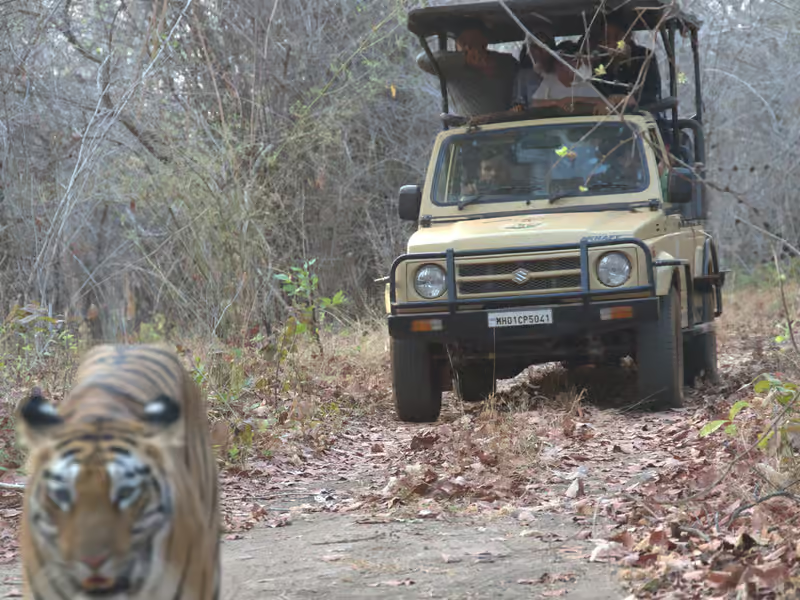
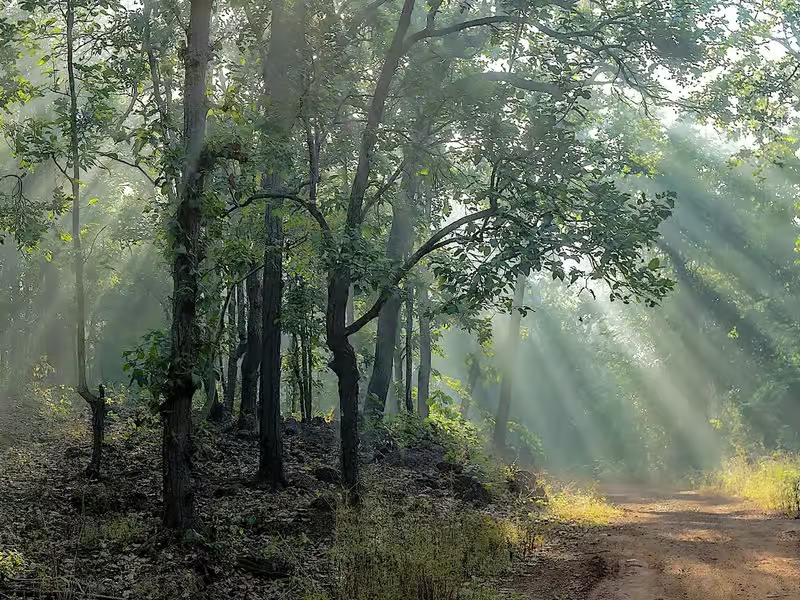
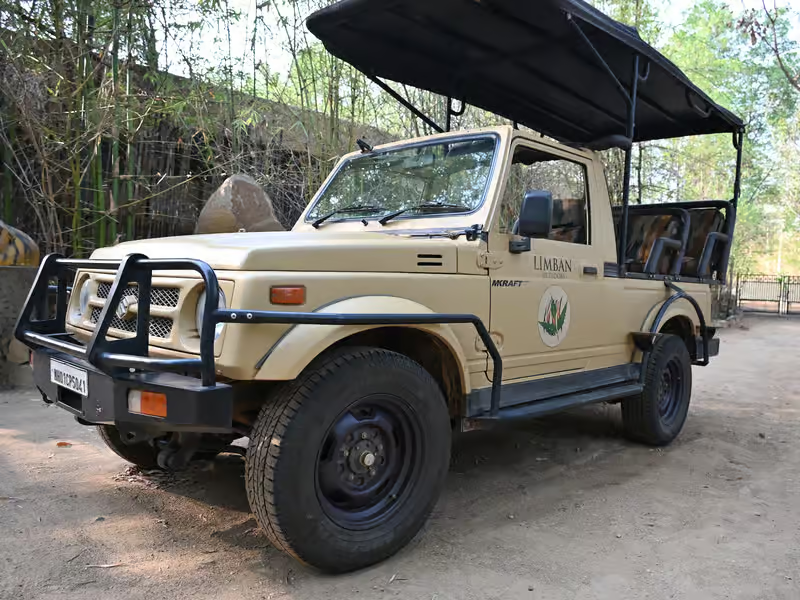
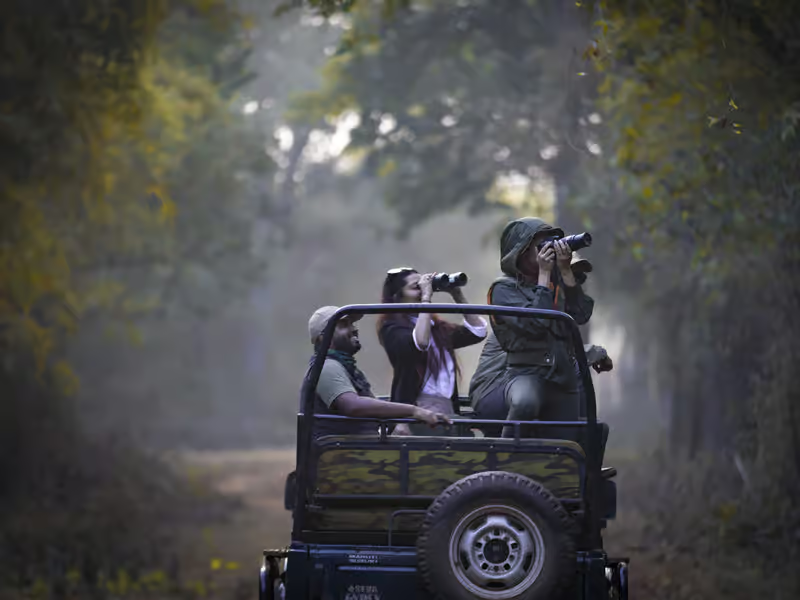
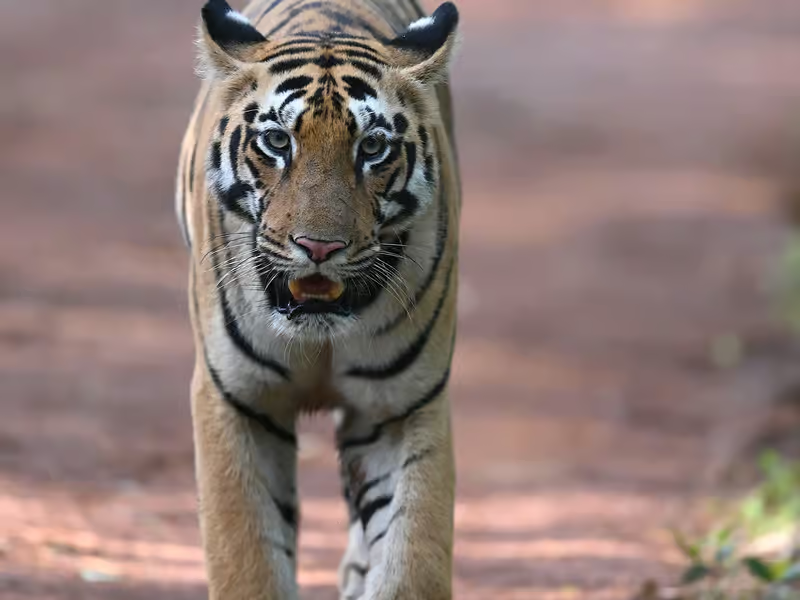
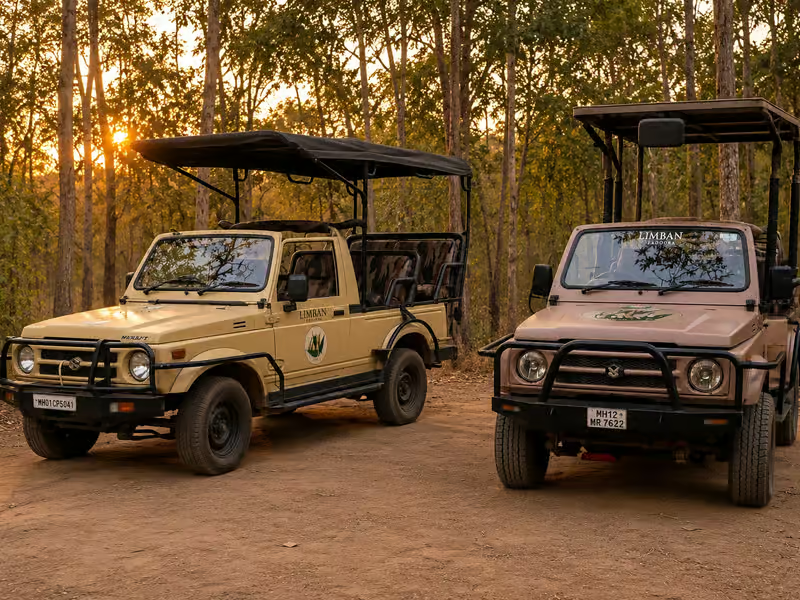
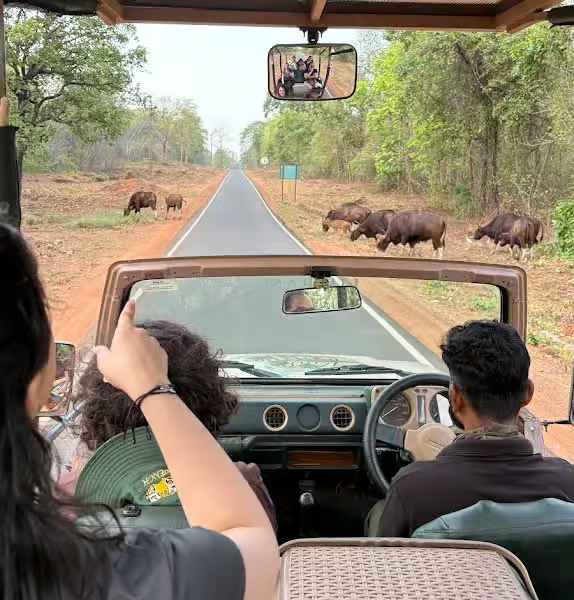
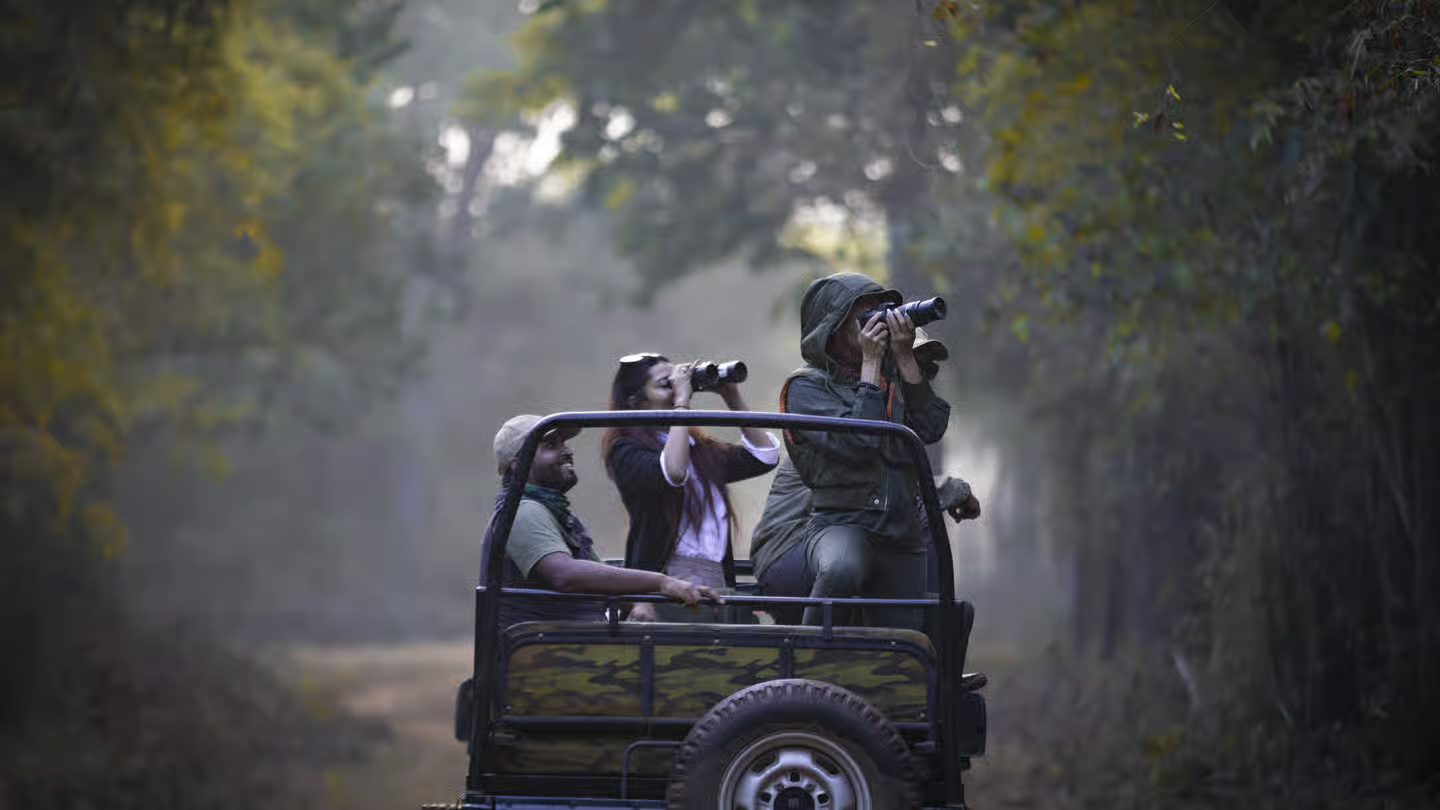
You are in an open Gypsy on a forest track at first light, and the naturalist has gone quiet. Not because there is nothing happening but because there is. A fresh pugmark in the red dust, pressed deep, edges still sharp. The driver cuts the engine. The forest does the rest.

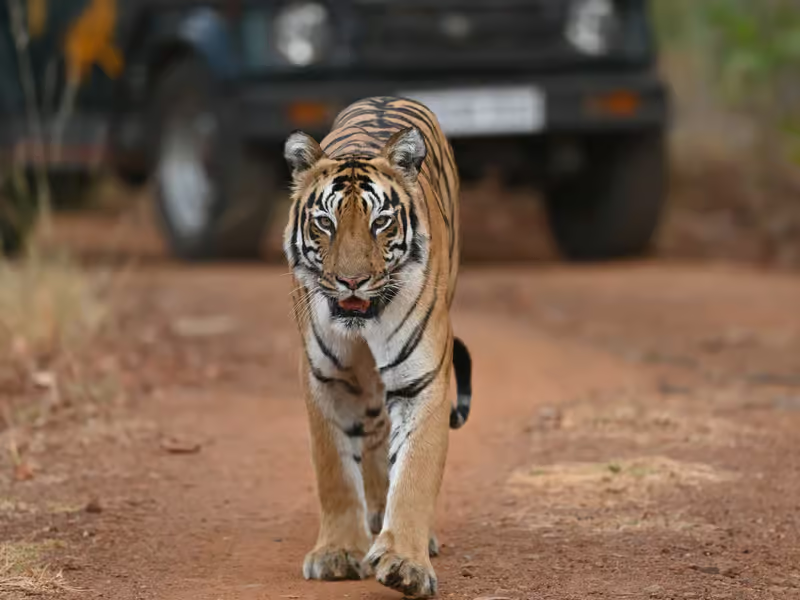
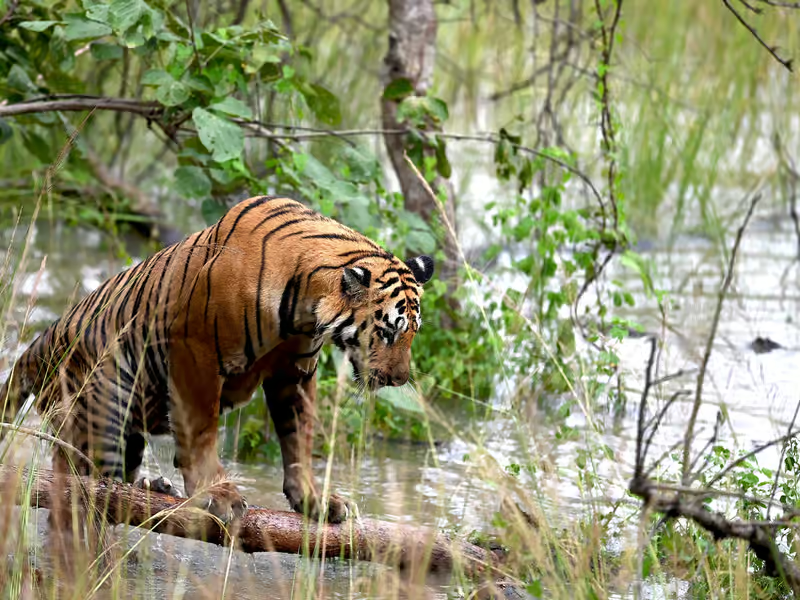
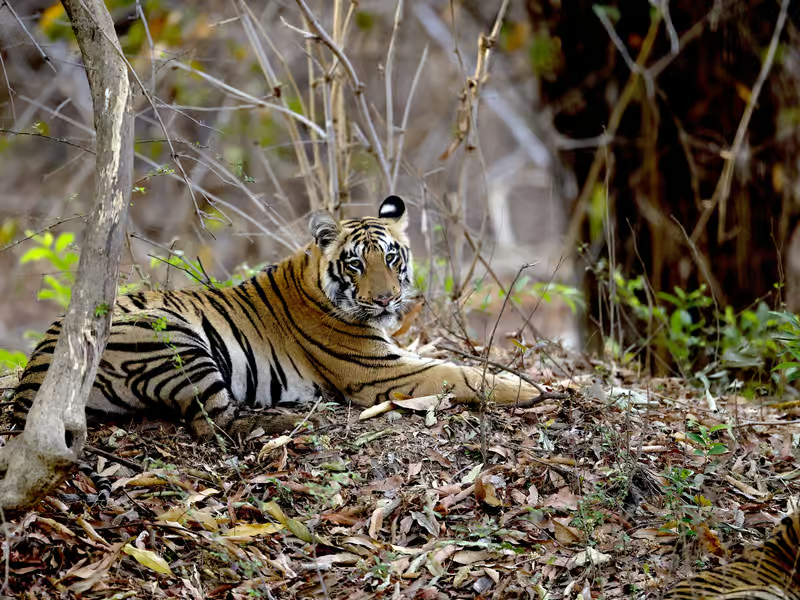
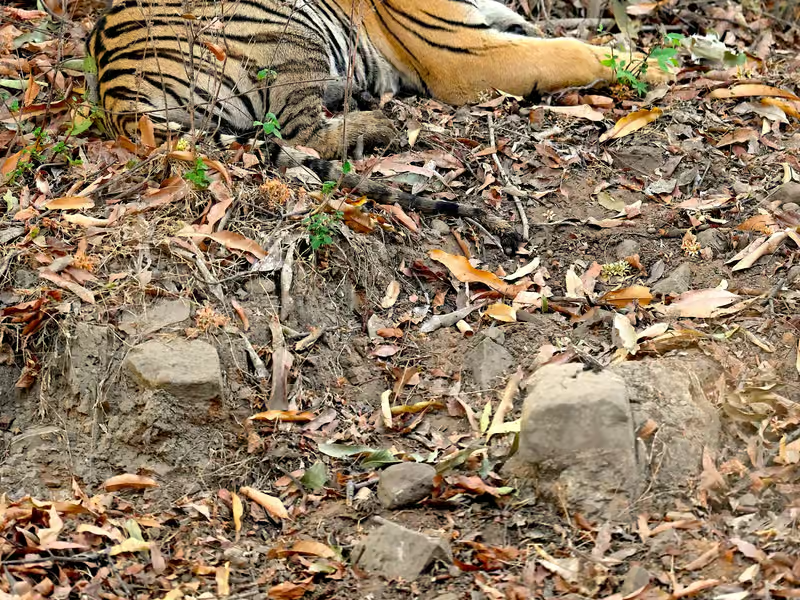
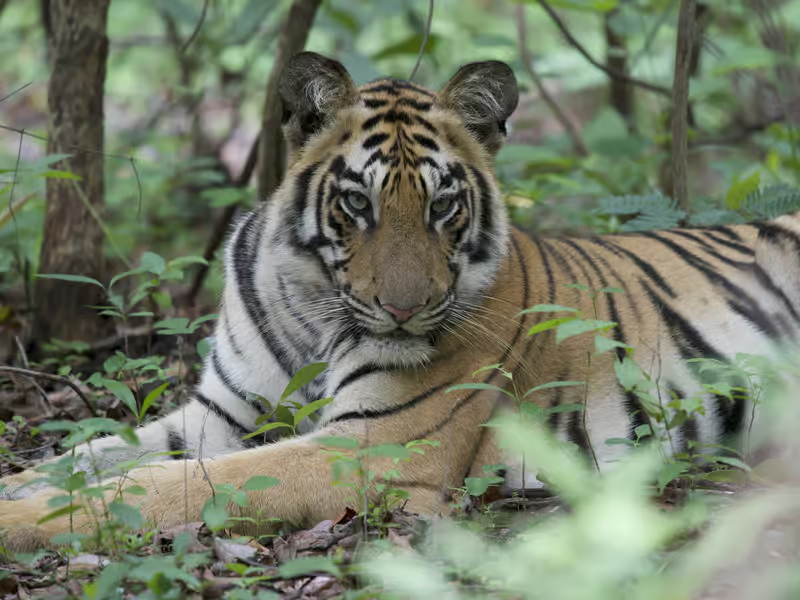
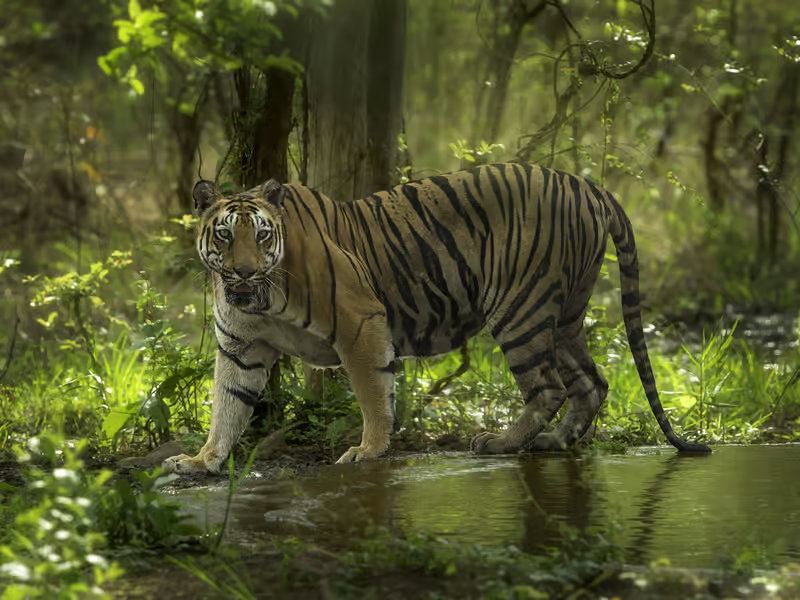
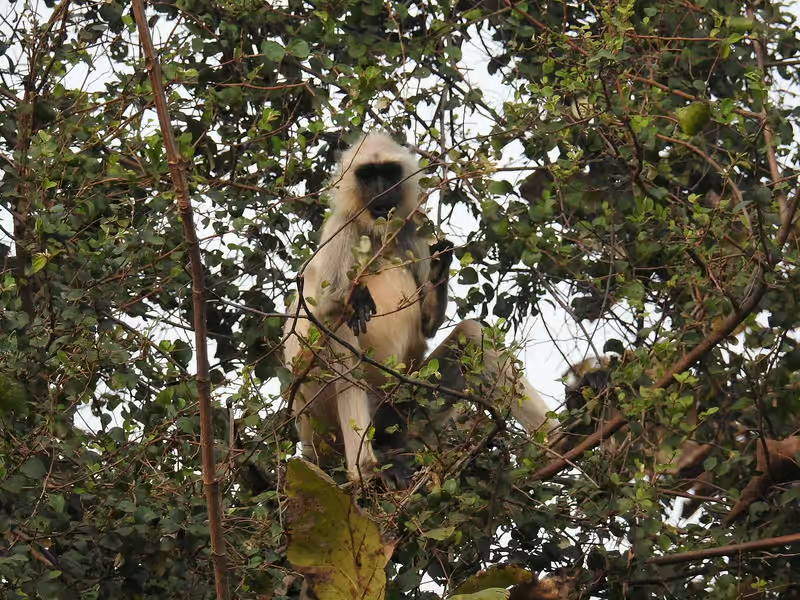
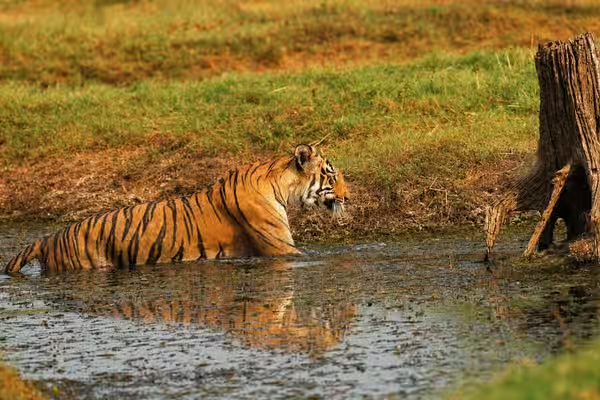
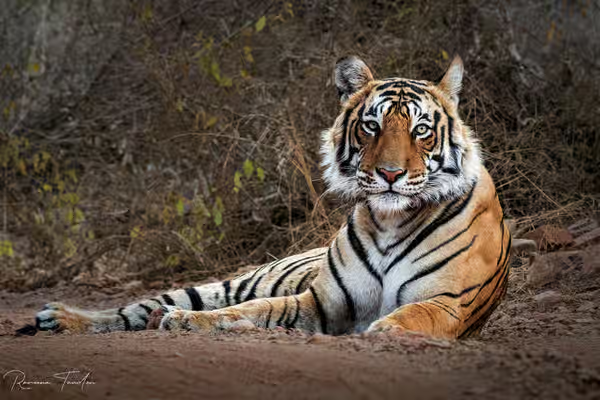
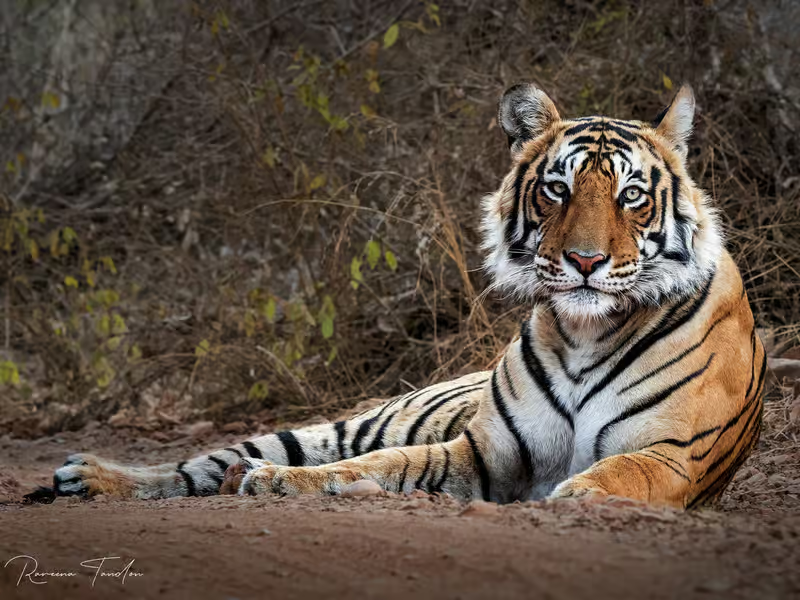
This is the standard Tadoba safari and the right place to start. Four hours, morning or afternoon, through one of the highest tiger density habitats in India. Your naturalist reads the forest continuously: alarm calls from sambar, a langur troop watching something you cannot yet see, the direction a peacock is running. On most drives in peak season you will find a tiger. What you cannot predict is what it will be doing when you do. Walking the track toward you, belly-deep in a waterhole, marking a tree. That unpredictability is not a flaw. It is exactly the point.

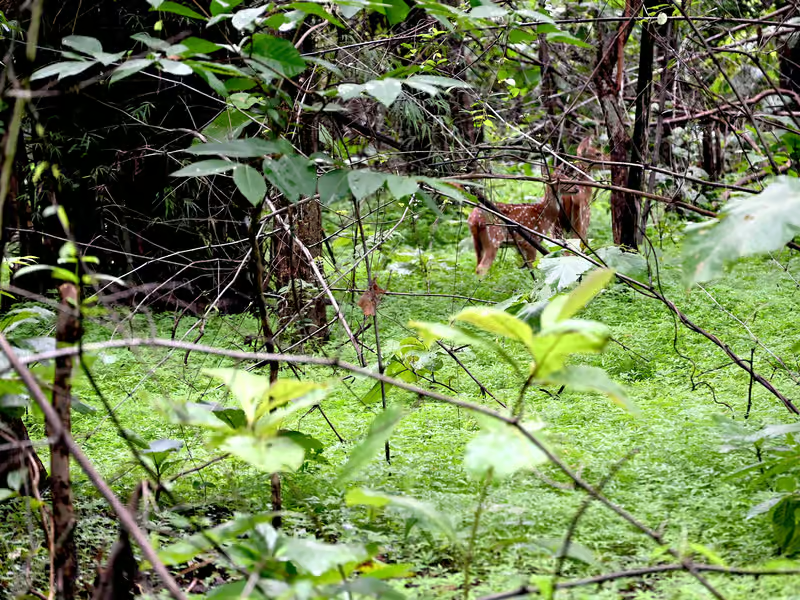
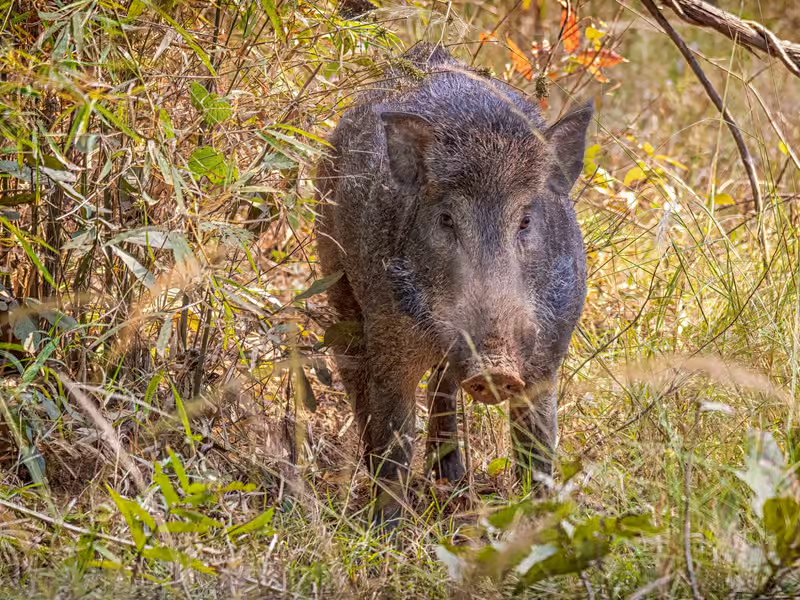
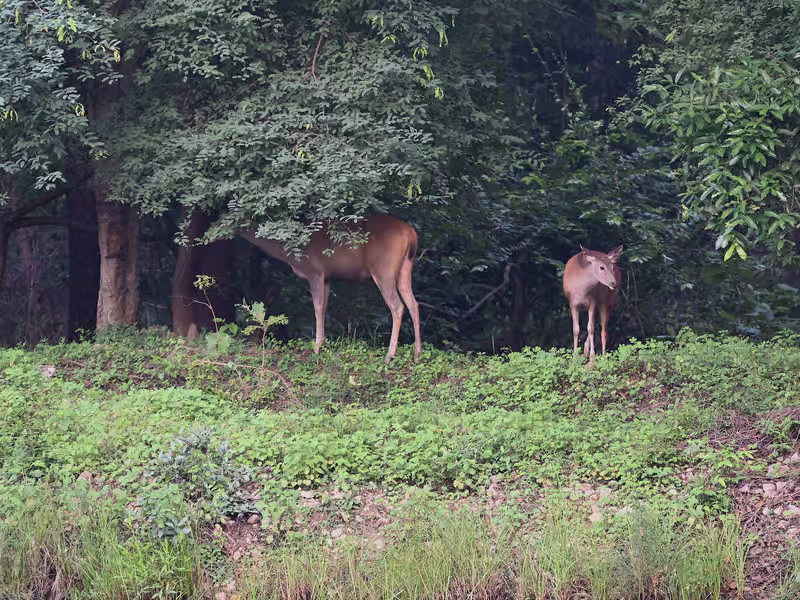
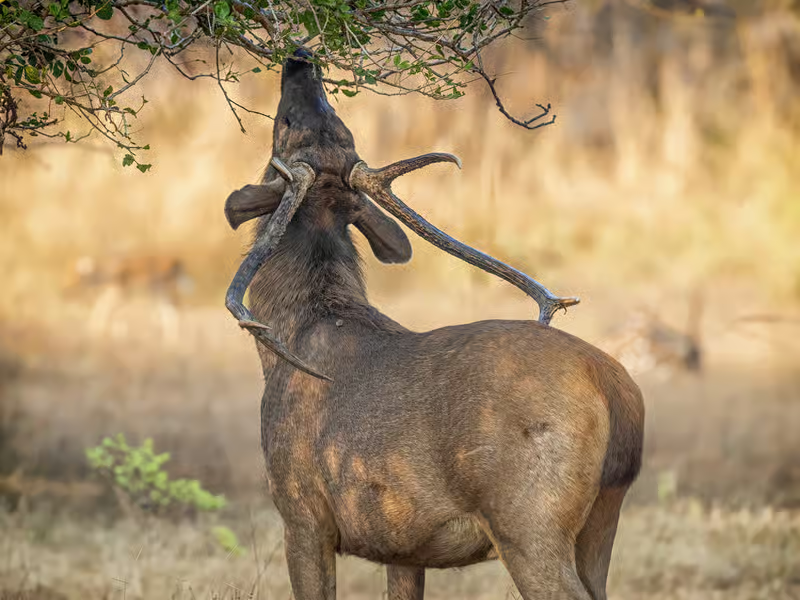
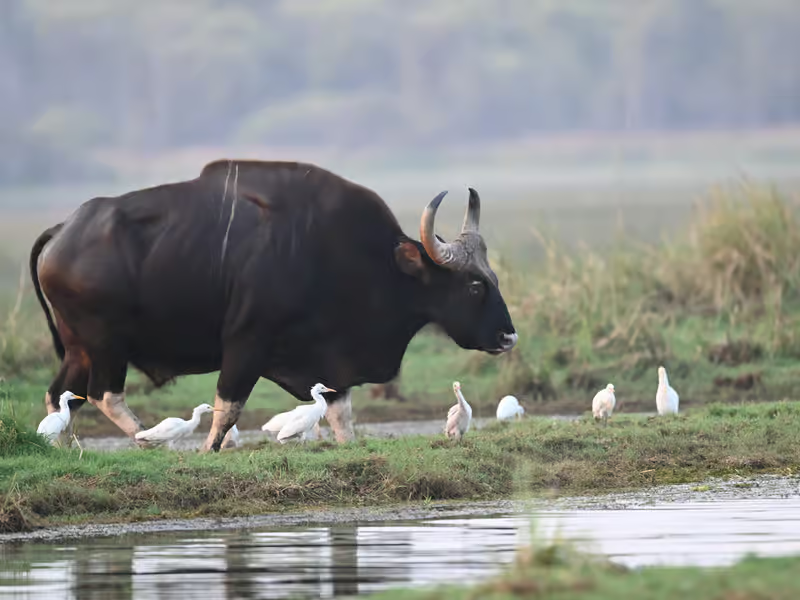
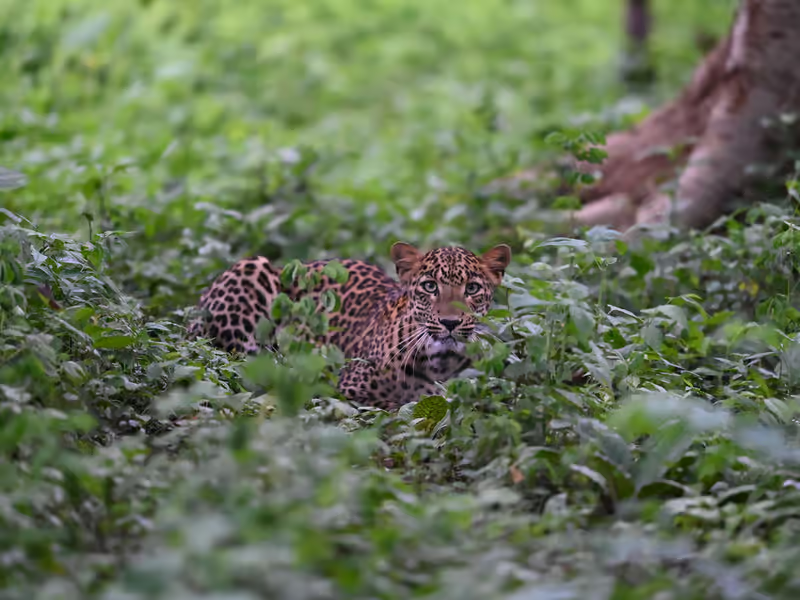
Spotted deer, sambar, gaur, wild boar and langurs are seen on nearly every drive. Sloth bears and leopards are possible, particularly near Kolara. Up to six guests per vehicle, certified naturalist and driver included.
DurationAbout 4 hours
HighlightBig cats & key mammals
Paceeasy to moderate
ComfortThe classic open-air feel
Ideal ForFirst-timers, safari lovers, and families
Full Day Safari Experience, Dawn to Dusk Wildlife Adventure
Dawn to Dusk Wildlife Immersion

The Full Day Safari

Most guests do two safaris a day: morning out, afternoon out, Limban in between. The full day safari removes the middle part. You enter before sunrise and stay until the forest closes, moving with the animal activity rather than against the clock.

What this gives you is not simply more time but a different relationship with the place. The midday hours when other vehicles have gone back are among the most interesting in the reserve. Heat pushes animals to water. Behaviour slows and becomes readable. A tiger that walked past at 7am may still be in the same waterhole at noon, and you are there to see what it does next. Bush breakfast and lunch are served at designated stops inside the reserve so you never have to leave.

This safari crosses between connected zones as conditions dictate. It is physically demanding and unambiguously for guests whose primary reason for coming to Tadoba is to be inside it for as long as possible.

DurationDawn to dusk
HighlightFull-day tracking & behaviour
Pacedemanding
ComfortImmersive, though physically demanding
Ideal ForSerious wildlife travellers
Irai Lake Boat Safari, Tranquil Backwater Wildlife Experience
Backwater Wildlife & Birdwatching

The Irai Lake Boat Safari

Irai Lake is fifteen minutes from Limban. Most guests drive past it on the way to the gate. The boat safari takes you onto it.

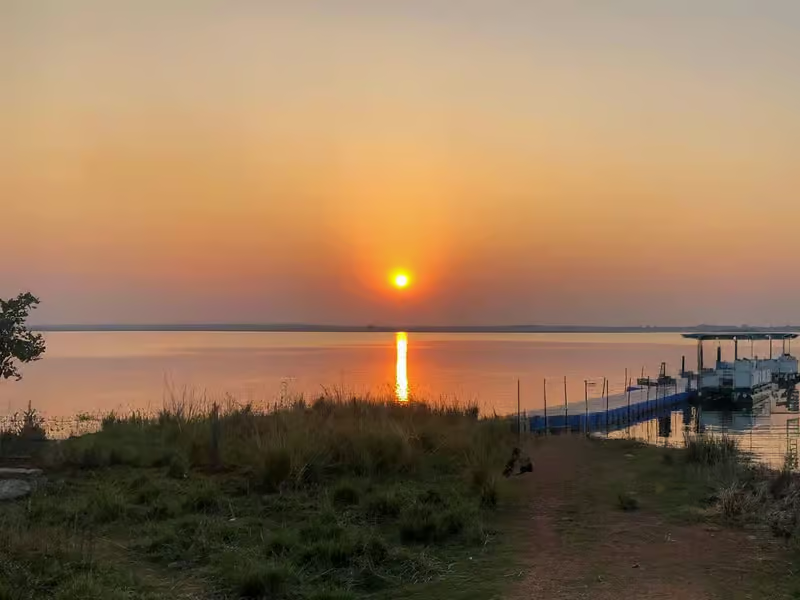
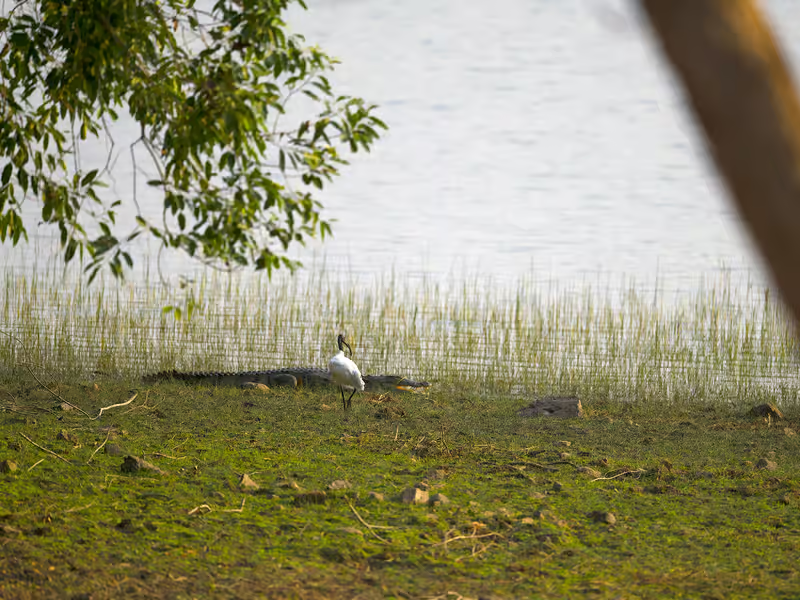
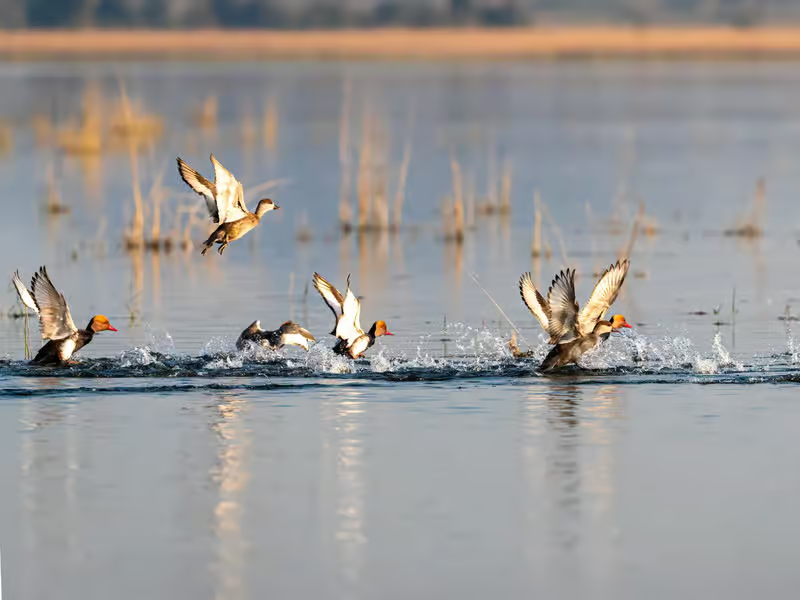
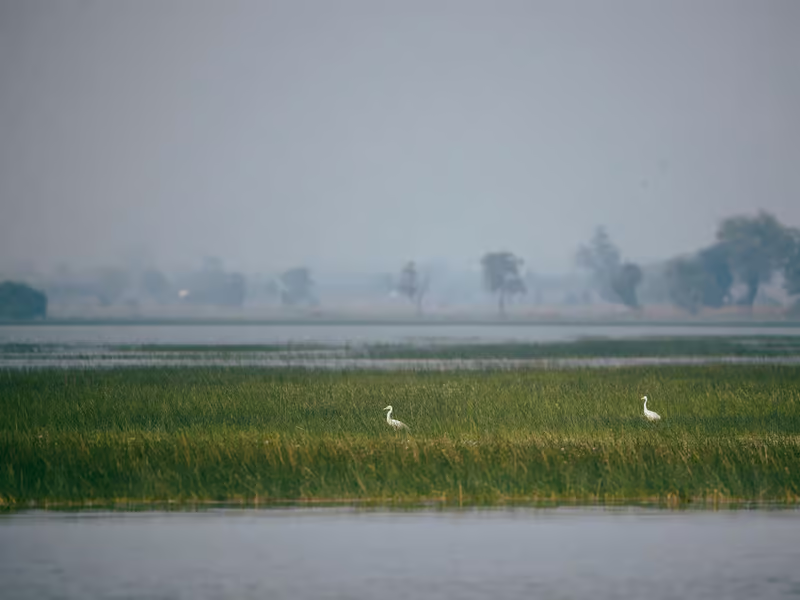
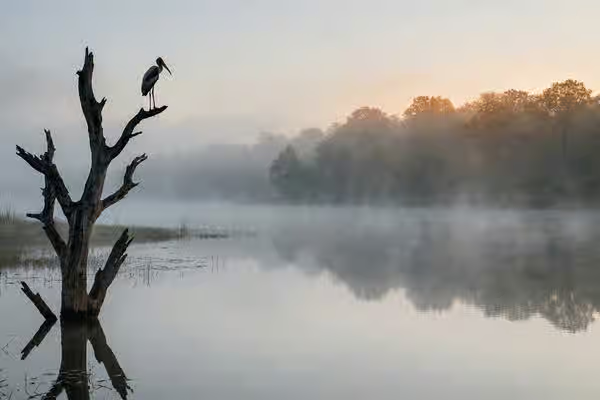
A non-motorised boat at dawn or late afternoon, moving without engine noise along a shoreline where animals come to drink undisturbed. Mugger crocodiles are almost always out, basking at close range on the muddy banks. The birdlife is exceptional: painted storks, cormorants, kingfishers, egrets, and in winter months large congregations of migratory waterbirds. The light on the water at both ends of the day is extraordinary for photography.

This is not a tiger safari. Sightings from the water are rare and genuinely incidental. What the lake offers is a completely different angle on the same landscape, and a quality of stillness that four hours in a Gypsy does not. Guests who do both consistently say the boat safari surprised them most. Closed during monsoon.

Duration1-3 hours (flexible)
HighlightWetland birds & lake views
Pacegentle
ComfortSpacious seats on a motor boat
Ideal ForAll nature lovers
Photographic Safaris, Optimised for Wildlife Photography
Specialised for Wildlife Photography

The Photographic Safari

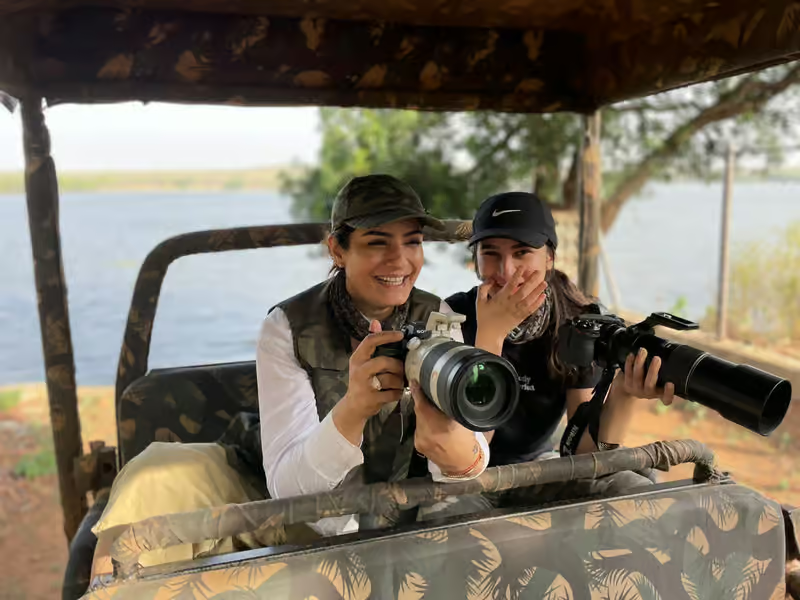
The standard safari is good for photography. This one is built around it, and it scales to how serious you are.

At its simplest: four guests instead of six, a driver trained to position the vehicle for shooting angles rather than coverage, a naturalist who understands that you do not always want to move on, and bean bags for lens stabilisation. The vehicle moves at your pace, stops when the light is right, and stays with a sighting for as case-by-case study.

For guests who want the full day: Limban can arrange a dedicated sunrise to sunset photography permit inside the reserve, the same vehicle and naturalist from first light to last, with genuine flexibility to follow animals across connected zones without the clock ending it. Freshly prepared meals come with you into the forest. The permit requires advance planning and a separate application to the forest department. We handle that entirely.

For photography groups and multi-day workshops: Tadoba is an exceptional base for a retreat built around wildlife photography. If you are a workshop leader or group organiser planning something at that scale, write to us directly.

Duration4 hours (full / multi-day optional)
HighlightLight, angles, time at sightings
Paceslow, sighting-led
ComfortSpacious, uncrowded, and adaptable
Ideal ForPhotographers and small groups
Birding Safari, Focused on Tadoba's Avian Diversity
Focused on Tadoba's Avian Diversity

The Birding Safari

Tadoba records over 280 bird species. Most of them are not seen on tiger drives, not because they are not there but because nobody is looking.

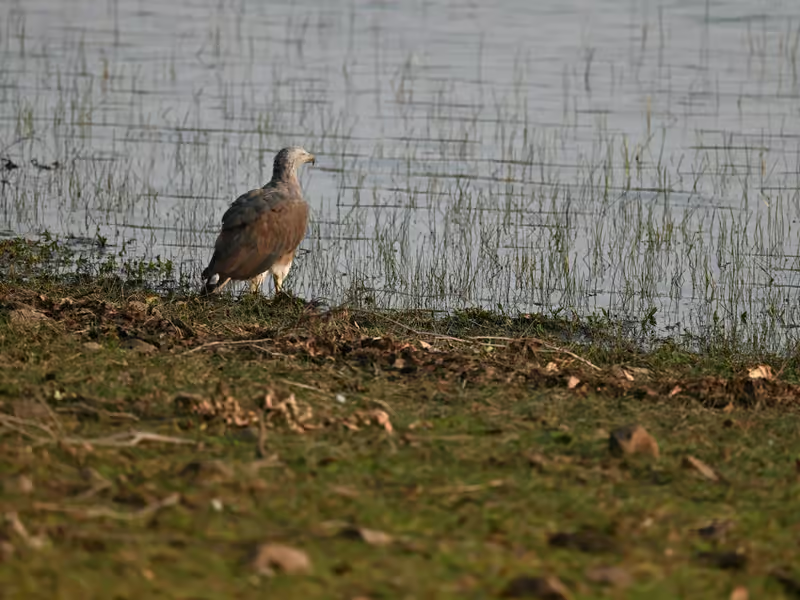
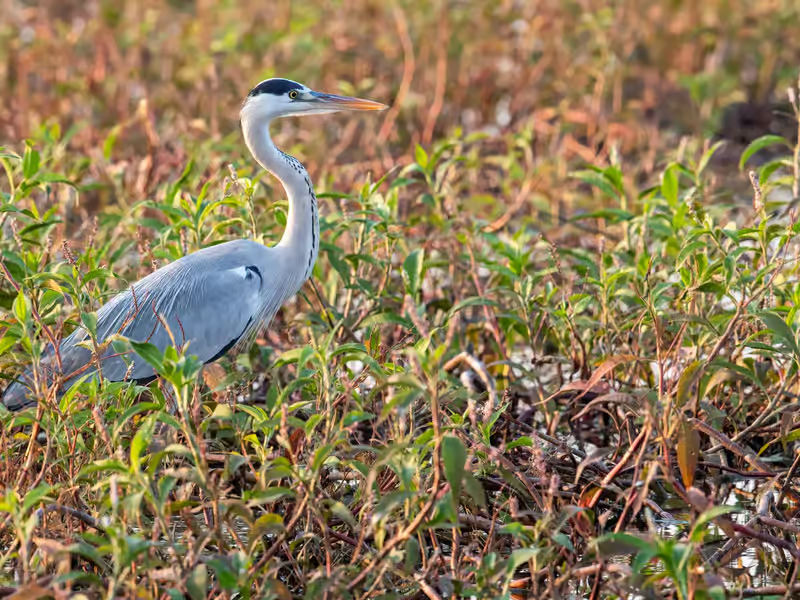
The birding safari goes into buffer zone habitats where avian diversity is highest: bamboo groves, wetland edges, mixed forest. The vehicle moves slowly and stops often. Your naturalist is reading the canopy and the undergrowth rather than the ground. Crested Serpent Eagles, Paradise Flycatchers, Indian Rollers, Grey-headed Fish Eagles, various kingfishers. In monsoon season the Indian Pitta. The forest sounds completely different when this is what you are listening for.

Most guests who book this safari are not ornithologists. They are guests two or three days into a stay who have done the tiger drives and want to see what else is here. It is almost always the safari they mention last when leaving, in the tone of something they nearly skipped.

DurationAbout 4 hours
HighlightForest & wetland birdlife
Paceslow, stop-and-scan
ComfortUnrushed and entirely relaxed
Ideal ForBirders and longer stays

Tadoba Safaris. Done Right.

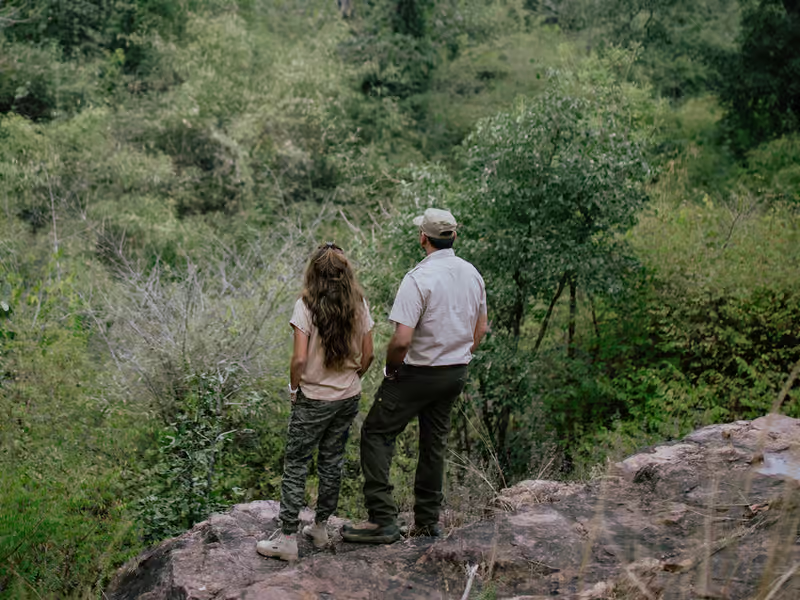
We've been guiding safaris in Tadoba for nearly a decade. Our naturalists grew up in these forests. They know where tigers drink at dawn, which trails leopards prefer, where the birds are nesting, and how to read the forest's daily rhythms.

The Safari Comes First. Always.

In Tadoba, where you sleep and where you safari are the same decision. Gates sell out months in advance — and the wrong gate can be a two-hour drive from your room.

So before we confirm your stay, we confirm your seats. We built Limban around one belief: nobody should travel to a tiger reserve and come home without having been in one.

Everything Else Follows

Permits, vehicle, naturalist, timing, gate strategy - we handle all of it. Your only job on safari morning is to get in the Gypsy and enjoy the wilderness.

Safari Essentials - The FAQs

Everything you need to know before, during, and after your Tadoba safari

Ask me anything. In any language.

Safaris are the foundation of the Limban experience, not an afterthought. We operate aSafari-First approach: we only confirm room bookings once we have finalised your safari bookings.

Our team checks the forest department's real-time gate availability against your preferred dates before you commit to a room. When you arrive, your seat in the jungle is already confirmed: the gate, the naturalist, the vehicle, the timing. We handle the permits, the entry fees, and any contingency planning around closures or weather. The only thing on your itinerary is the safari itself.

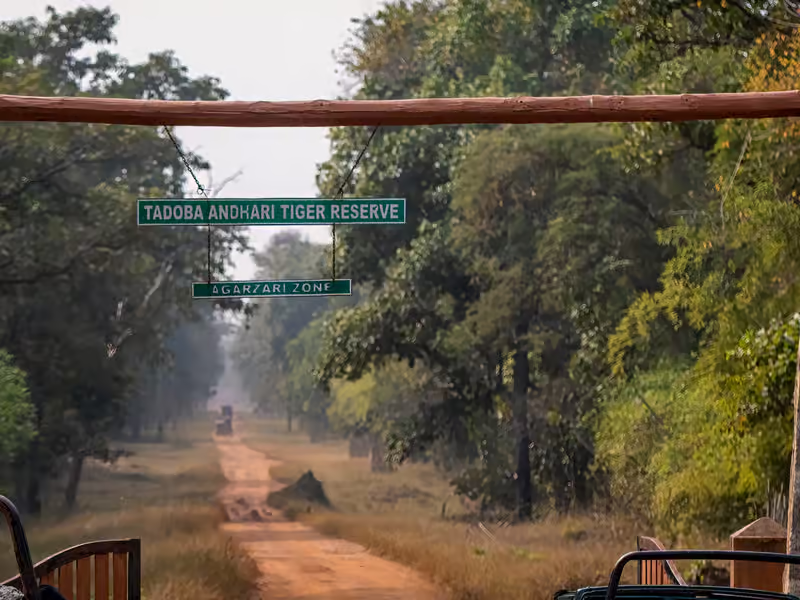
Gate scarcity at Tadoba is real, but it rarely stops us. Our naturalists track recent sightings and tiger movement continuously across all zones, so if Khutwanda is fully booked on your date, we already know whether Moharli, Dewada, or Agarzari is currently the stronger option. Every gate opens into a defined set of forest tracks; knowing which of those tracks has been active in the past 48 hours, and timing the drive around that, is where the difference between a good safari and a blank one usually lies.

Limban is 15 minutes from Khutwanda Core Gate and 25 minutes from both Moharli Core and the Dewada/Adegaon buffer zones, among the most productive entry points in the reserve. The extended zones run between one and one-and-a-half hours, and we factor that travel time into the plan when those gates are the better call.Read our Gate Geometry guide

Core Gates

  • Khutwanda — 15 mins
  • Moharli — 25 mins

Closest Buffer Zones

  • Dewada / Adegaon — 25 mins
  • Junona / Agarzari — 25–35 mins

Extended zones (1–1.5 hrs): Mamla Buffer, Zari Peth Buffer, Nimdela Buffer, Navegaon (buffer & core).

Core gates close every Tuesday; buffer zones close every Wednesday. For guests staying more than two nights, this is actually useful: the alternating pattern means we can always put you in the jungle, just through a different door.

Tuesdays — Core Closed

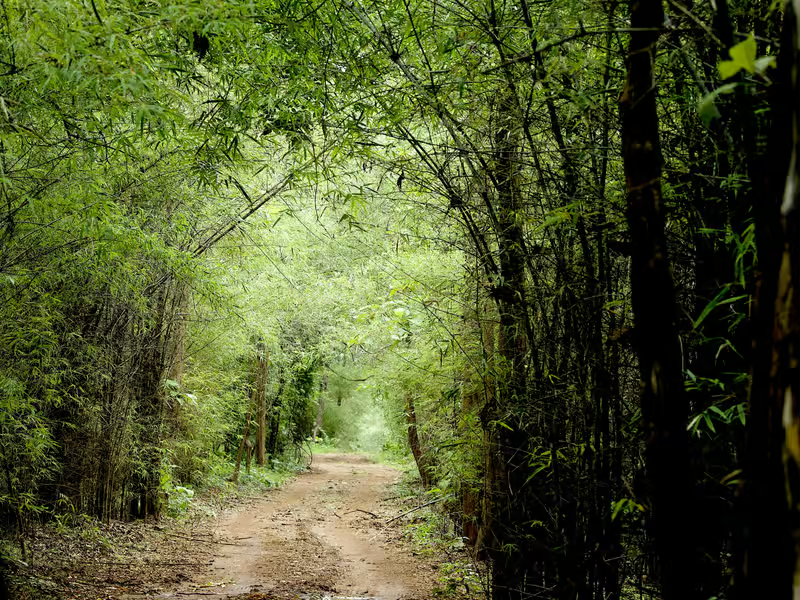
We head into select buffer zones that feel entirely private on these mornings, with bamboo tunnels, alarm calls, and rarely another Gypsy in sight.

Wednesdays — Buffer Closed

We focus entirely on the core zones. With buffer guests absent, the tracks are noticeably quieter. This is a useful counterweight to any busy weekend morning.

Yes, and for many guests it's the right call. A private vehicle means the naturalist's full attention is yours, stops are made on your terms, and the pace suits your group rather than a compromise between strangers. Photographers especially find it changes the experience significantly. You stop when the light is good, not when the group is ready to move on.

Request a private vehicle when booking your stay. Subject to availability, and we'll need a little lead time to coordinate with the forest department.

Partly, and this is worth understanding clearly. Every year from 30 June to 30 September, all core safari gates close. This is a forest department decision applied across Maharashtra's tiger reserves: tracks become unsafe in heavy rain, and the reserve needs the three months undisturbed for regeneration. It has nothing to do with any individual resort or zone.

What remains open are all seven buffer zones: Agarzari, Devada, Junona, Kolara Chauradev, Belara, Alizanza, and Navegaon Buffer. These run safaris throughout the monsoon, though daily permit volumes are lower than peak season and Wednesday closures still apply. Individual sessions can be called off if rain makes driving dangerous. That's a real caveat worth knowing.

The monsoon experience is genuinely different from a peak-season visit. The forest turns a deep, dense green, mammal tracking requires more patience, and birdlife is at its most active — making this the best window for our birding safaris. Tigers are still encountered regularly in the buffer zones during this period; they don't go anywhere, they just become harder to spot in the thick canopy.

If your dates fall between July and September, we work entirely within the buffer system and factor permit availability into the planning from the start.

A Tadoba safari is not a zoo visit and not a game drive with guaranteed sightings at every corner. It is an open Gypsy moving slowly through one of India's best-managed tiger reserves, guided by someone who knows this forest well enough to read it — the alarm calls of a sambar, a pug mark in the dust, the direction a langur is staring.

Most of the drive is quiet anticipation. That is not a flaw; it is the experience. The moments of real encounter, when they arrive, are different from anything a screen or a wildlife documentary can prepare you for. A tiger walking down a track forty feet from your Gypsy, unbothered and unhurried, is something that stays with you.

Come with patience, leave your expectations loosely held, and listen to your naturalist. First-timers consistently tell us the safari was the part of the trip they didn't know they needed.
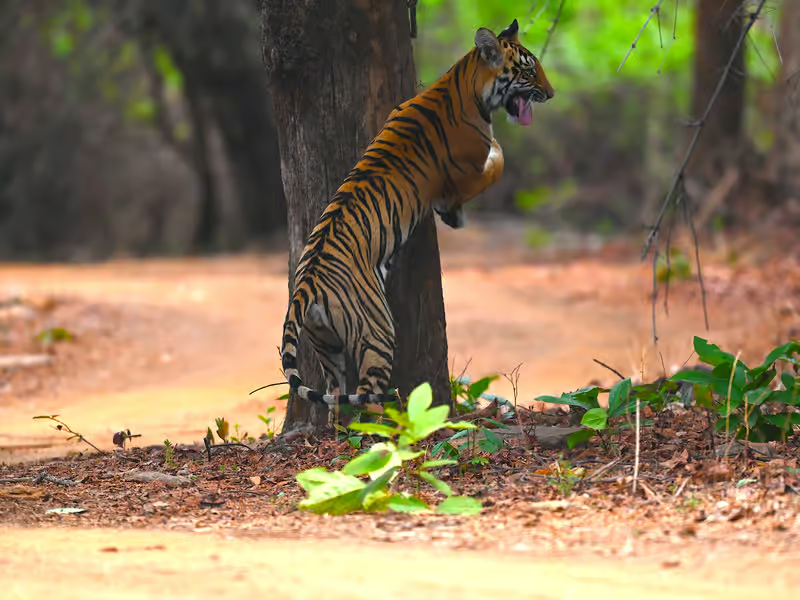
Morning and late-afternoon drives consistently produce the best results. Tigers are most active at both ends of the day, and the light is far better for photography. The 6:00 AM drive catches overnight movement still fresh on the ground; the 3:30 PM drive puts you near water sources as temperatures drop and animals begin to move again.

Morning Safari

6:00 AM

Best for tracking overnight predator movement

Afternoon Safari

3:30 PM

Water holes active as the heat breaks

Peak Season

Nov – Jun

Dry season thins the forest, and sightings improve significantly from March

Tadoba has one of the highest tiger densities of any reserve in India, and sighting rates here are genuinely strong, but no responsible operator will guarantee one. What we can say is that a blank safari at Tadoba is rare, and a boring one is essentially unheard of.

Leopards, wild dogs, sloth bears, gaur, and marsh crocodiles are all regularly encountered. The forest itself (teak, bamboo, dry deciduous canopy) rewards attention even when the big cats are resting out of sight. We plan your safari dates, timing, and zones to give you the best realistic odds. The rest is the jungle's call.
A standard safari lasts roughly three to four hours. You enter at dawn or late afternoon, cover a defined route, and return. The all-day safari is a full day inside the reserve: you enter with the morning drive and stay through the afternoon session without coming out, breaking midday with a proper meal stop inside the buffer zone.

What changes is depth. You cover more ground, follow a sighting further without time pressure, and spend the quiet midday hours when other Gypsies have left simply watching the forest. If you miss something in the morning, the afternoon gives you another chance with fresh animal movement. For anyone serious about photography or wildlife observation, the all-day format consistently produces the most memorable encounters.

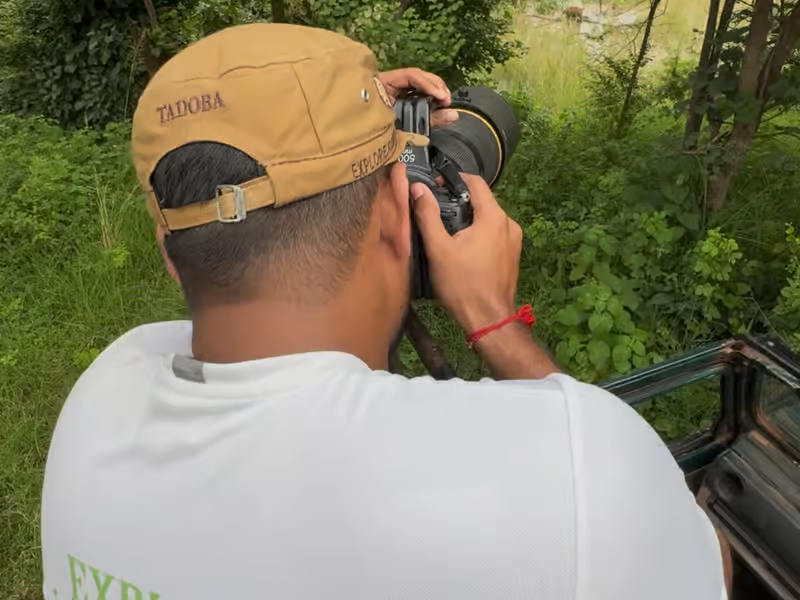
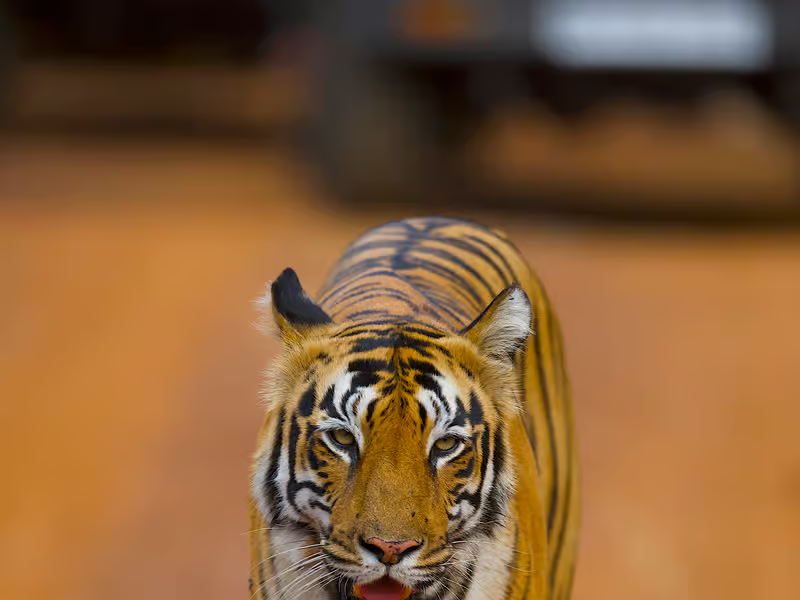
The single most important factor is habituation. Tadoba's tigers have lived alongside safari vehicles for decades and do not treat them as a threat. That means when you find a tiger, it stays. It walks, rests, marks territory, drinks: all at distances that would be impossible in a less visited reserve. Photographers consistently note that a 70 to 200mm lens is sufficient for tiger portraits here; that says everything about how close and how unhurried these encounters are.

Seasonally, the choices are distinct. March to June thins the vegetation considerably and opens up sightlines. Dry season Tadoba rewards patience with clear, unobstructed frames. December to February brings cooler temperatures and a quality of morning light that photographers return for specifically. Post monsoon, the forest is lush and dense; harder for mammal work, better for birds and atmosphere.

Full day permits are available on request and make a genuine difference if photography is your primary reason for coming. You follow a sighting without the clock running, stay through the midday lull, and are back in position when afternoon movement begins. Ask us about this when booking.

Most people who book a birding safari at Tadoba are not birdwatchers. They're guests who did a tiger safari the day before and want to see the forest differently: at a slower pace, looking at things they walked past yesterday.

Tadoba records over 280 bird species, many of them large, colourful, and impossible to miss: crested serpent eagles, Indian rollers, Paradise flycatchers, and the Indian grey hornbill, which nests inside hollow trees and is genuinely extraordinary to watch. Your naturalist runs these drives with the same depth of knowledge as a tiger safari, just with a different lens. You'll come back having seen things on a morning drive that a tiger-focused Gypsy would have rolled straight past.

Irai Lake sits on the edge of the reserve and is one of the region's most important water bodies, acting as a critical drinking source for wildlife and a major congregation point for waterbirds. The boating safari takes you out onto the lake itself, which puts you at eye level with the shoreline in a way a Gypsy never can.

Marsh crocodiles are commonly seen basking on the banks. Migratory birds use the lake heavily in winter. The light on the water in the early morning, with the forest edge behind it, is extraordinary for photography. It is not a tiger-focused experience, but it is a completely different relationship with this landscape, and many guests find it the most memorable drive of their stay.

Tadoba's climate varies dramatically across seasons, and knowing what to expect makes a real difference to what you pack and how you plan. OurTadoba Weather & Climate pagegives you a live 14-day forecast timed to your visit, alongside 25 years of historical monthly averages — so you can see at a glance whether your dates fall in cool dry mornings, peak summer heat, or the lush post-monsoon window.

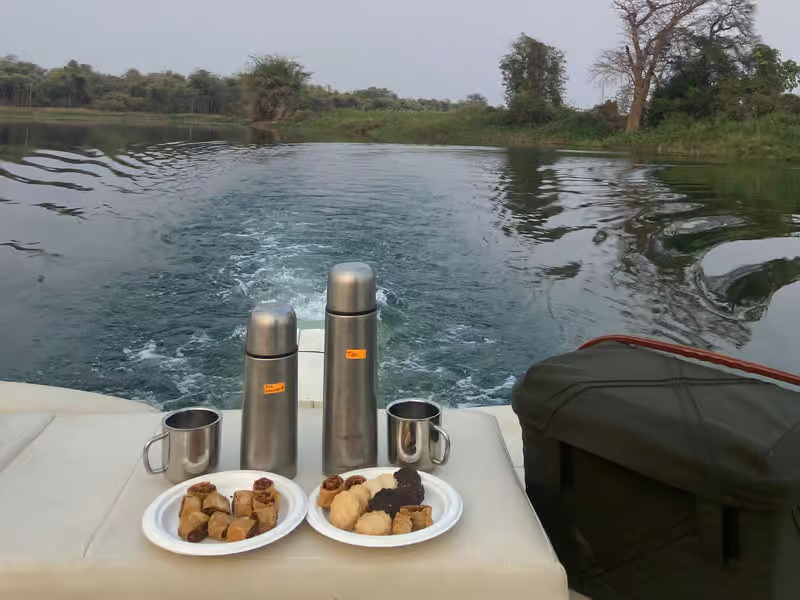
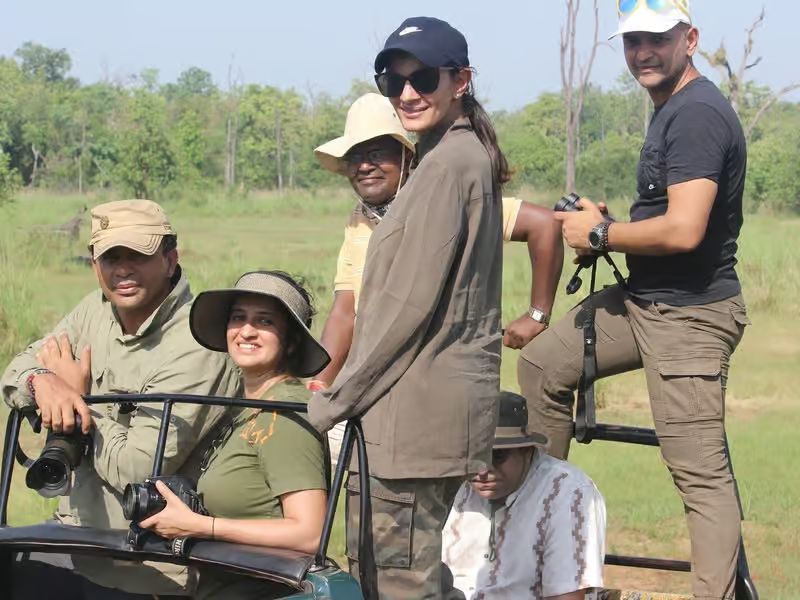
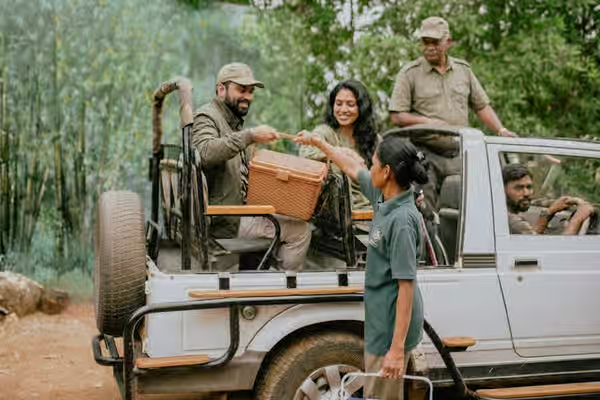
Food and water are sorted — we send a handcrafted hamper with every safari, and your naturalist knows exactly where to stop for a mid-drive break. Beyond that, what you bring depends on the season and your priorities.

Essentials

  • Wide-brimmed hat
  • Sunglasses
  • Sunscreen
  • Light jacket or fleece (mornings)
  • Insect repellent

Photography

  • Telephoto lens (200mm+)
  • Extra batteries
  • Spare memory cards
  • Bean bag or lens support

Useful

  • Personal binoculars
  • Field guide (we can suggest one)
  • Small daypack

Phones are not permitted on safari. This is a forest department regulation applied at every gate in Tadoba without exception. Beyond compliance, it genuinely improves the experience: the jungle rewards presence, not scrolling.

On clothing: avoid white entirely. Tadoba's famous red basaltic dust coats everything by mid-morning, and it will find its way onto whatever you're wearing regardless. Earth tones — olive, khaki, muted brown — are practical and blend into the landscape. By the end of the drive, that red dust on your clothes is about as honest a souvenir as Tadoba gives you.

There is no hard minimum age set by the forest department. A previous rule excluding children under 10 was lifted in 2020, so families with young children are fully permitted to visit if accompanied.
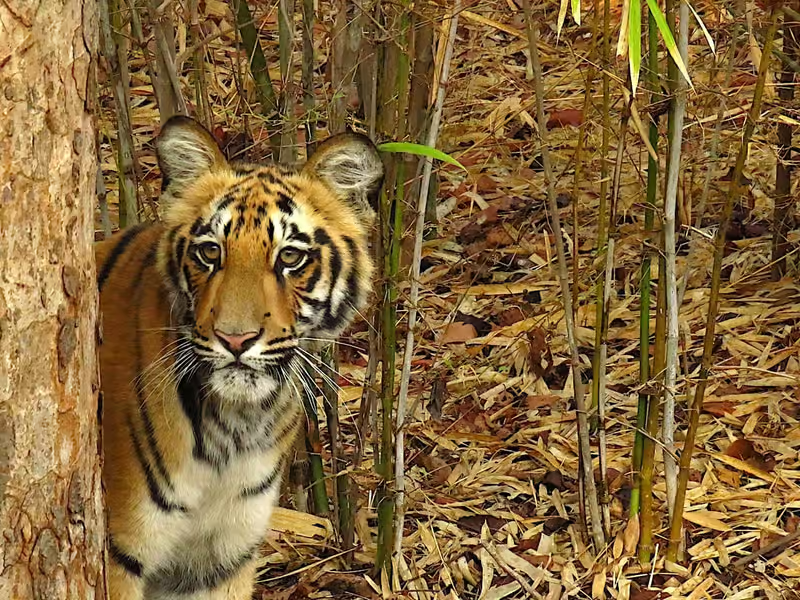
Safaris with young children work very well. Our naturalists are used to calibrating the experience: a vehicle with young children gets different commentary and a different pace to one with photographers, but neither misses the essentials. Children tend to be remarkably quiet in the jungle when something is happening; the forest has a way of holding attention that screens usually can't compete with.
For seniors or guests with mobility considerations, our vehicles are manageable. There's a step up to board and the tracks can be uneven, but we've never had a guest tell us it stopped them enjoying the drive. Let us know in advance and we'll make sure the right vehicle and naturalist are assigned.

The honest answer is that Tadoba safaris are as safe as they are wild, and that combination is what makes them work. Tadoba's tigers are well habituated to safari vehicles. They are not threatened by them, and they do not treat guests as prey. Decades of low-impact, regulated tourism have produced animals that will walk alongside a stationary Gypsy, rest near the track, or cross the road in front of you entirely unbothered. That habituation is the foundation of safety.

On top of that, every safari operates within a strict framework: forest department-certified naturalists, vehicles that never leave designated tracks, established safe-approach distances that your guide enforces without exception. Our vehicles carry full medical kits and emergency communication equipment on every drive, and our naturalists undergo continuous training in both wildlife behaviour and guest safety.

In nearly a decade of safaris at Tadoba, we have never had a safety incident involving wildlife.

Ready for your Tadoba Safari?

Start with your free non-committal Room Reservation. We'll look at your dates and help you plan & book your safaris.

Safari Insights & Stories

Before you head out, read our insider takes on zones, gates, safaris, species, and the art of the Tadoba safari.

Or Contact Us Directly