Tuning In: Why You Should Read Tadoba With Your Ears
Most guests arrive waiting to see the wildlife. The real secret is learning how to listen to it, especially after dark.

Archana Bhagat Schäfer
Published 15 March 2026
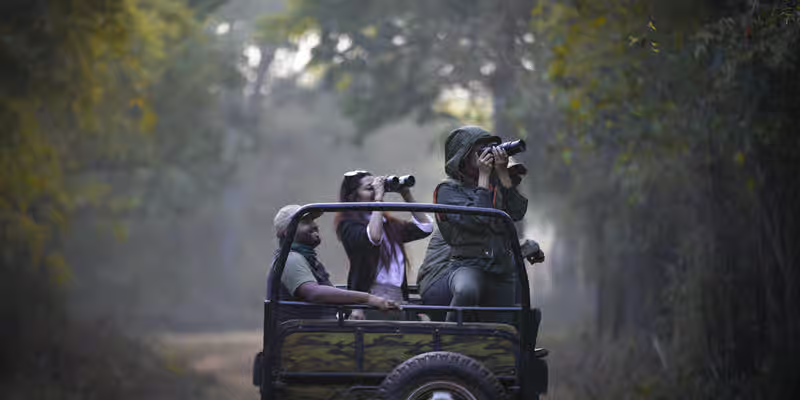
Most people come to Tadoba with a mental slideshow already running. Tiger stepping out on a track. Leopard on a branch. A gauntlet of cameras pointing in the same direction. You get into the jeep, pick a side, fix your eyes on the road ahead and wait for someone to whisper, “There, at two o’clock.”
For a lot of first‑timers, the forest is treated like a silent film. The sound is just background; people do safaris with the hope of "seeing" what they came for.
The forest itself does not work like that. Long before anything steps onto a track, the jungle has already announced what is happening. If you are only looking, you are missing half the story.
The sounds that give the forest away
On your first drive, everything feels just like noise. By the third, if you choose to pay attention, you start to notice that some noises repeat, and there is a reason for it. They do not repeat by accident.
There is the sharp, nervous “tuck‑tuck” from somewhere in the bamboo. That is a spotted deer. It usually means something is not quite right. A movement, a shape, a smell. It is the forest’s general alert.
Then there is the deep, carrying bark of a Sambar deer. One call. Then another. Then another. The calls feel heavier, more urgent. When a Sambar starts, it is telling the whole neighbourhood that a large predator is moving with intent. Most of the time, if you sit still long enough and listen, that sound will tell you more about where to look than any shouted “Tiger!” ever will.
And then, there is the moment when everything else stops. The birds go quiet. The usual rustle just drains away. That silence is not empty. It is a reaction. The forest is holding its breath.
You are sitting in a jeep on one road. The animals who live here are already broadcasting what is happening on all the others.
Here's what's wrong with most “luxury” places in the wild
The strange thing is that, for most people, this whole soundscape only exists as noise while they are out in the vehicles. Once they get back to their hotel, resort, or lodge they assume the safari is over. The wild belongs somewhere out there in the park. The room is just a regular hotel room that happens to be nearby.
A lot of high‑end properties bank on that idea. They build heavy, sealed structures with thick walls and tightly shut double-glazed windows. The air‑conditioning hums. The 58-inch TV rolls the latest news, a movie, or something to entertain the kids. Business as usual. You could be anywhere. You see the forest in the day. You do your thing and sleep in perfect silence at night.
The one problem with this version of “luxury” is that the forest does not actually go quiet when you go to bed. Quite the contrary.
In Tadoba, if anything, the soundscape becomes more captivating, more intense — yes, perhaps more under your skin — after dark. Night-active animals start moving. Different birds take over. The alarm calls, when they come - as they often do - feel sharper, clearer, more "uh - what was that?" in the cooler night air. Shutting that out is tidy and totally respectable. But it is also a wasted opportunity.
Letting the night in at Limban
Limban sits in a landscape where the forest does not end at the park gate. It spills into the buffer and the farmland and the scrub just beyond our boundary. The camera traps on tracks around the property regularly capture tigers, leopards and other wildlife walking past at night, sometimes a stone’s throw from where you sleep. None of this is hypothetical. We can show it to you when you visit us.
We did not build Limban as a place where you shut the door and forget where you are. At the same time, we are a resort, not a bush camp. The rooms are solid, comfortably built, all with proper walls, air‑conditioning and everything you would expect at this level. You can sleep as well here as you do anywhere else.
The difference is that you always have the choice to step closer to what is happening outside.
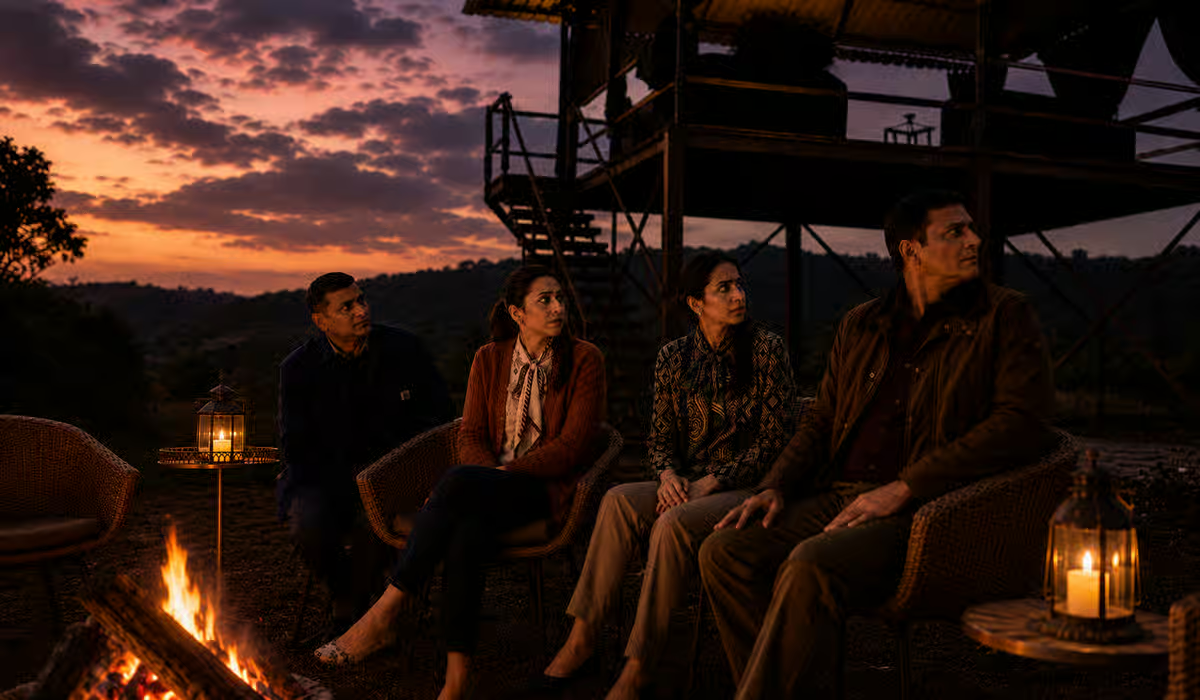
Every room has a terrace or outdoor sit‑out, and there is enough space to walk around safely within the compound after dark. If you sit out for half an hour at night with the lights low and your phone put away, the sound of Tadoba will simply arrive. Crickets. Nightjars. Owls. Wind in the bamboo. Dogs in distant villages reacting to something moving through the fields.
And more often than you think, you will hear the forest make room for something bigger. A run of alarm calls from deer on the edge of farmland. A dog barking itself hoarse and then suddenly stopping. On very still nights, the deep, carrying sound of a tiger somewhere just beyond the last line of trees. It is the sort of sound that goes under your skin in the best possible way, and at the same time makes you quietly grateful for the few metres and the good strong fence between you and whatever is out there.
Inside, the soft hum of the AC is there if you want to close the door and sleep. Outside, just a few steps away, the wild is close enough that you cannot quite ignore that it is alive.
How this changes your stay
No one books a safari thinking, “I hope I hear a nightjar.” Our guests usually book it to see tigers, leopards and big, clear moments. Those may still be the headline memories of your trip and you have, statistically, the best chances to see them here. But if you let it, the sound will quietly do something else.
You will notice that the calls you hear on a safari at dusk sound familiar because you heard a version of them the previous night from your terrace. You will catch yourself pausing when the forest goes suddenly quiet, rather than assuming nothing is happening. When a guide asks everyone to “just listen for a bit,” you will know there is a reason.
The drives start to feel less like one‑off shows and more like brief windows opened into something that has been going on all along, around you, while you were eating, talking, sleeping.
When you go back home and close the door of a perfect, silent, insulated room, it may take you a few nights to understand what is missing. The city will give you many sounds. What it rarely gives you is the sense that an entire, living landscape is just outside, passing messages from one end to the other.
At Limban, actively listening to the wild is part of the stay - if you want let it happen. You are not just here to tick off a sighting and retreat to a bubble. You are here, in a very real way, to tune into raw nature for a short while. Some of what you hear will fade. Some of it will stay with you forever.
Ready to tune into the forest?
The best way to experience Tadoba is to stay in a forest that talks to you. Explore our Safari Types or Contact us to plan a trip where you can truly listen.
More Interesting Reads
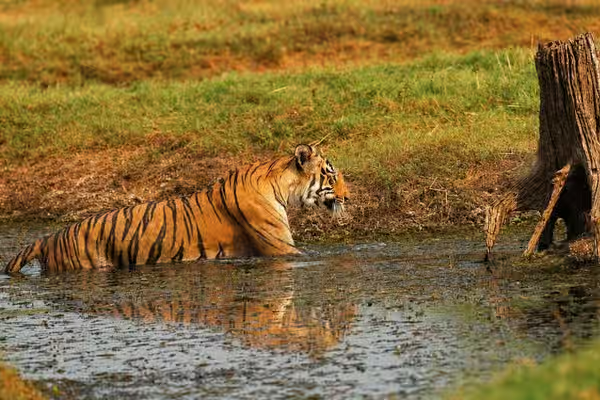
115 Tigers. And Why The Number That Matters Most Is Not That One.
Tadoba's tiger density is a fraction of Corbett's or Bandipur's. Yet its sighting rates are among the highest in India. The gap between those two facts is the real story, the one nobody is talking about.
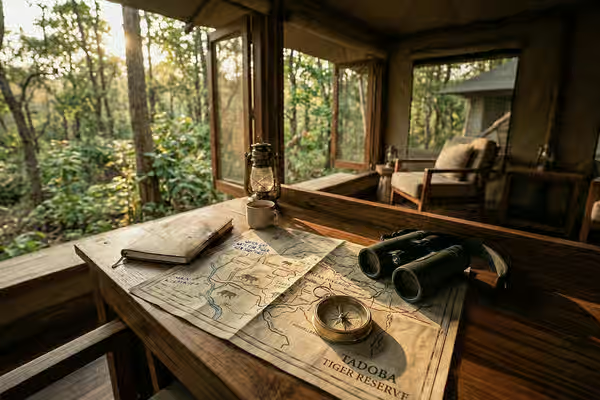
Tadoba Safari Gates: Where You Stay Changes Everything
Tadoba is larger than Greater London, yet most resorts sit close to just one gate and leave you guessing about the others. Where you stay determines what time your alarm goes off, how long you drive in the dark, and whether a 3-hour safari costs you 4 hours - or 8.
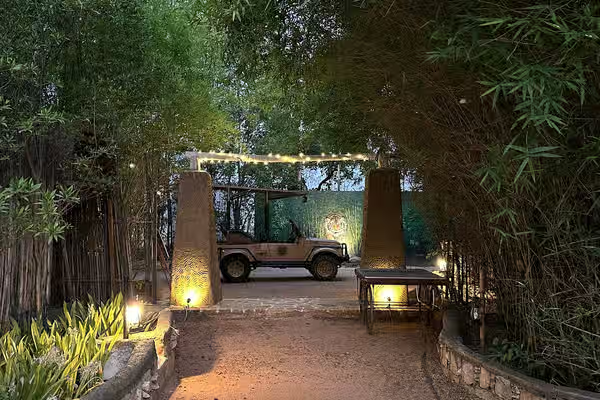
Two Full Bathrooms In Every Room? This Detail Matters. Here's why.
Nobody should be queuing up at 5am to get ready when the jeep is already out waiting. You will only really get this on your first morning here. Here's why such details matter.
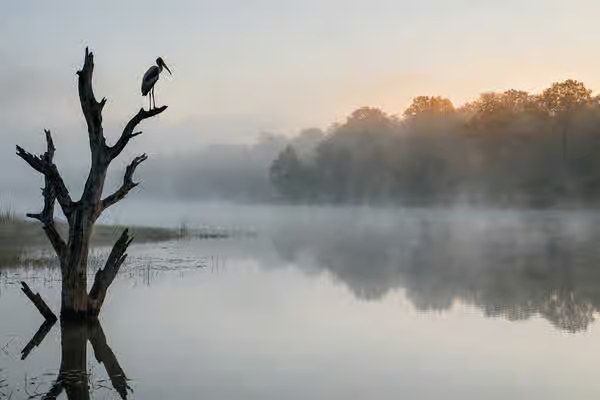
The Birding Safari at Tadoba: Why It Deserves a Trip of Its Own
Over 280 documented species, an IBA-designated forest, and mornings that have nothing to do with tigers. A complete guide to one of Central India's most overlooked wildlife experiences.
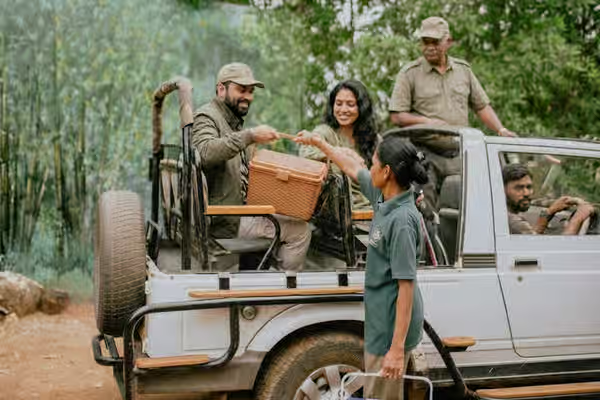
Core Zone or Buffer Zone? Here's What We Actually Tell Our Guests
The hierarchy of core over buffer is one of the most persistent myths in Indian safari planning. Here is what actually matters.

Tadoba vs Ranthambore: An Honest Comparison for Your First Tiger Safari
Two of India's finest tiger reserves. Two very different arguments for why you should visit them. We are going to make the case for both.