The Birding Safari at Tadoba: Why It Deserves a Trip of Its Own
Over 280 documented species in an IBA-designated forest, and mornings with nothing to do with tigers. Central India's most overlooked wildlife experience.

Archana Bhagat Schäfer
Published 11 March 2026 · 9 min read
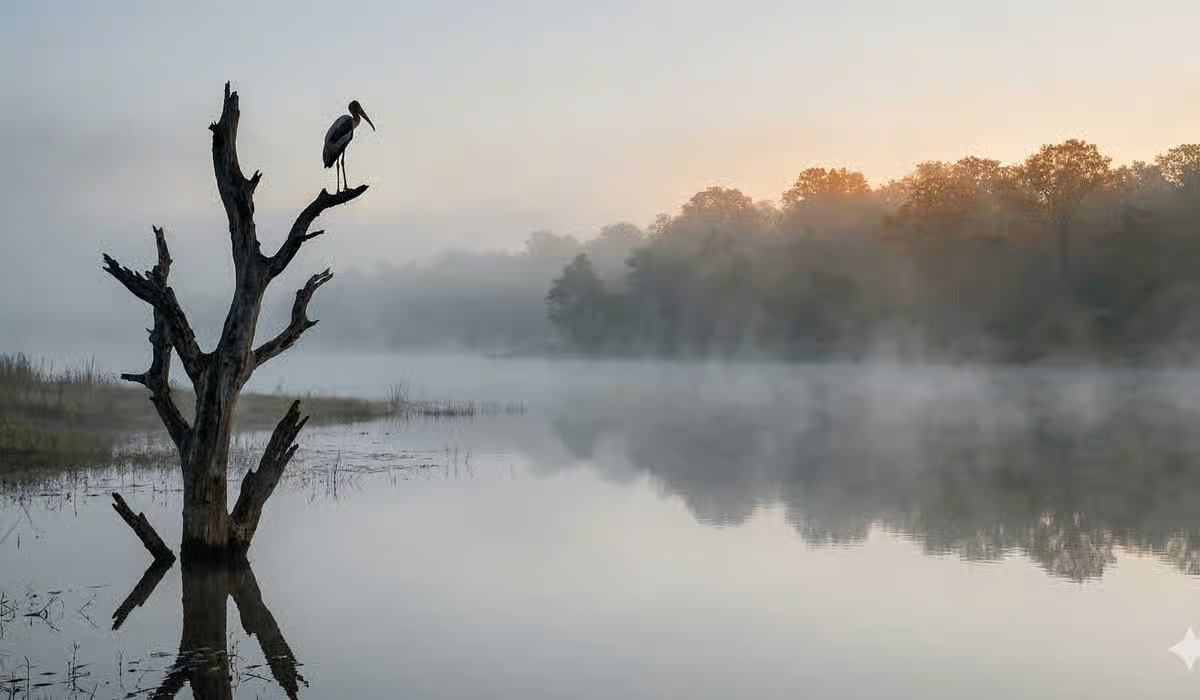
It happens about forty minutes into your first morning drive.
The jeep has stopped. The guide is scanning the treeline, hand raised, listening. Everyone is tense, hoping for stripes. And then, off to the left, on a bare branch lit up by the first sun of the day, a Crested Serpent Eagle opens its wings and lifts off. Slow. Wide. Banded feathers catching the gold. A flash of blue crosses the track at head height and vanishes into bamboo before anyone thinks to lift a camera. Somewhere behind the vehicle, two clean notes rise through the canopy, and the guide says, without turning: Indian Pitta.
All of this happens while you are waiting for a tiger. It happens on every safari. Every single one.
Most people nod, half-smile, and go back to watching the track ahead. A few sit up straighter. And a smaller number, the ones who brought binoculars alongside the telephoto, already know what kind of forest they have walked into.
This is for them. And for anyone who might become one of them.
The Thing Nobody Tells You About Tiger Safaris
A tiger safari is a thrill. Your heart rate goes up, your hands tighten around the camera, and when the animal appears, fifteen metres away, unhurried, looking through you rather than at you, there is nothing like it on earth.
But here is the thing about thrills: they are tiring. By the third or fourth drive, the pattern starts to repeat. You wake at 5am, climb into the jeep, scan the forest for three hours, feel the rush or the let-down, and return. Every drive is intense. Every drive asks the same question: will we see one?
A birding safari asks a completely different question. It asks: what is here that's worth experiencing?
And the answer, at Tadoba, is always: more than you expected.
The pace changes. The volume drops. You stop scanning at tiger-height and start noticing things at every level. The woodpecker hammering a dead teak trunk. The kingfisher that has been sitting on that branch for five minutes waiting for you to notice it. The Paradise Flycatcher trailing its white ribbons through a shaft of light like something out of a dream you will try to describe to someone later and fail.
People who have spent three days wired on adrenaline come back from a birding morning looking rested. That is not a coincidence. The forest is doing something to your nervous system when you stop chasing and start watching. The silence, the slow focus, the small satisfactions of noticing. This is not a lesser safari. It is a different way of being in the jungle. And for many guests, by the third day, it is the one they wanted all along.
Why Tadoba, Specifically
India has plenty of dedicated birding spots. Bharatpur, Eaglenest, Sattal, the Nilgiris. All well known for good reason. Tadoba does not usually appear alongside them. That is exactly the gap we want to fill.
Tadoba Andhari Tiger Reserve holds over 280 documented bird species across its core and buffer forests, including the broader landscape of Irai Dam, nearby farmland edges, and the Andhari river corridor. BirdLife International recognises the reserve as an Important Bird Area, a status given only where globally threatened species and strong local populations exist.
Those are real numbers from real studies. Not resort brochure figures.
But the species count alone is not the point. What makes Tadoba special for birding is that the entire forest is already set up for close wildlife encounters. The tracks are there. The guides are there. The jeeps run twice a day. Vehicle numbers per gate are controlled. You are not hacking through unmarked forest hoping for a lucky sighting. You are moving through a managed reserve with trained naturalists who know exactly where the Brown Fish Owl roosts this week.
And if a tiger crosses the track while you are photographing a hornbill? Well, that happens too. Nobody has ever complained.
Five Habitats in One Morning
Tadoba is not one type of forest. It is five, pressed together into a landscape you can cross in a single drive. Each holds its own birds, and knowing what lives where is what turns a good birding day into a great one.
Dry teak forest. The backbone of the reserve. This is where Changeable Hawk-Eagles hunt from open perches and Tickell's Blue Flycatchers hold court along shady streambeds. Come in winter, when the teak drops its leaves, and the forest opens up. Suddenly you can see sixty metres through the understorey. The birding gets dramatically easier.
Bamboo stands. Thick, green, full of sound. White-rumped Shama, Indian Scimitar-Babbler, and the occasional Jungle Bush Quail flushing out of the edge in a burst of wingbeats that makes everyone in the jeep jump.
Grasslands and meadows. Raptor country. Short-toed Snake Eagles working the ground. Black-shouldered Kites hovering at the edges. Indian Rollers, that impossible electric blue, everywhere you look. During migration, Steppe Eagles and Greater Spotted Eagles pass through. Both are species of global conservation concern.
Tadoba Lake and wetlands. The heart of the waterbird action. Grey Herons, Purple Herons, storks, egrets, jacanas. And the bird that makes serious birders sit up: the Grey-headed Fish Eagle. A Near Threatened raptor whose global population may be as low as 10,000 mature individuals. Tadoba is one of its reliable inland sites in Central India. Every confirmed sighting is worth writing down.
Irai Dam and its backwaters. Accessible by boat through the buffer zone. Between October and March this place transforms. Bar-headed Geese arrive from Central Asia. Pintails and Pochards gather on the open water. Painted Storks, Near Threatened colony nesters, line the dead trees at the waterline like something from a painting that forgot to be realistic.
The Boat at Dawn
Let us talk about the boat, because almost nobody does.
The Irai Lake boat safari launches from Sitarampeth, near the Moharli Gate area and about 14 mins drive from Limban. You board in the half-dark, when the air still has the night's cool in it and the water is a sheet of grey glass. The engine is off or near-silent. You drift.
The treeline on the far shore starts to catch the first light. A warm pink that moves down the canopy, tree by tree, as if someone is slowly turning up a dimmer switch. A cormorant surfaces ten metres from the boat, shakes its wings, and settles back onto the water. Painted Storks stand on bare branches above their reflections, motionless, absurd, beautiful. A Grey Heron launches itself off a rock with the kind of slow-motion grace that large birds manage and small birds never attempt.
There is no engine noise. No other boat. No other people. Just the water, the birds, and more sky than you have seen in months.
We have watched guests come back from this at 8am, sit down to breakfast, and go quiet for twenty minutes. Not because they are disappointed. Because they are still processing. One guest told us, without any drama at all, that it was the calmest she had felt in two years.
If you are staying three nights or more, we consider this non-negotiable.
The Birds That Stay with You
We could give you a checklist. Every website does. Instead, here are the encounters that make people re-book.
The Indian Paradise Flycatcher in breeding plumage. The white-morph male, its two ribbon tails streaming through dappled understorey light, is one of those animals you think cannot possibly be real until you see it. Breeding season runs May through July. The buffer zones near Agarzari and Devada are the most productive spots. You will need patience and a guide who knows the territory.
The Indian Pitta at your feet. This one arrives with the monsoon, June through August. Heard far more often than seen. That two-note whistle, wheet-tew, is the sound of the rains arriving in Central Indian forests. Finding one on the forest floor takes slow driving, open ears, and a guide who knows the difference between a Pitta call and a hopeful tourist.
A Malabar Pied Hornbill at a fruiting fig. Large, loud, flying in a lopsided pattern that makes it look slightly improbable in the air. But pair one up at a fig tree and you can sit and photograph for twenty minutes without moving. Nobody walks away unchanged.
A Brown Fish Owl at last light. Nocturnal, nearly invisible in most parks, surprisingly reliable at Tadoba if your guide knows the roosting trees. Late evening, the last light going orange, the owl opens its eyes and considers the waterhole below. That is a photograph. That is also a moment.
When to Come
October to February is the prime window. Migratory birds arrive from Central Asia, Siberia, and the Himalayan foothills. The teak canopy thins, sight lines open up, mornings are cool (12–18°C at dawn), and species diversity peaks. Bar-headed Geese, Ruddy Shelduck, Forest Wagtails, Bluethroats, and a rotating cast of leaf warblers that keep even experienced birders guessing. This is the window we recommend for a first birding visit.
March to May. The forest dries out and heats up past 40°C. Every remaining waterhole becomes a stage. Raptors ride the thermals. Kingfishers concentrate at shrinking pools. Difficult conditions, but rewarding, especially after 10am when most tiger-focused vehicles have left and the forest belongs to whoever stayed.
June to September. Monsoon. Most core gates close. Select buffer zones stay open. The Indian Pitta arrives. Breeding plumage appears. The forest goes dense and green and alive with insects. Trails are slippery, leeches are real, and visibility drops. But for those comfortable with all of that, species you struggled to find in winter are suddenly calling from every second tree.
The Practical Side
You ride in the same open-top 4x4 Gypsy used for tiger safaris. Seats up to six, though for serious birding, fewer is better. Less noise, less movement, more control over pace. If birding is the priority, tell us upfront and we build the vehicle around that.
Every safari includes a mandatory Forest Department guide. What makes the real difference is a naturalist who knows the roost sites, the call points, the feeding trees. At Limban, our naturalists carry birding checklists and are comfortable slowing right down when a birder asks to stop. That matters more than you think.
Morning safaris start around 6:00 to 6:30 AM and run for roughly four hours. Evenings from 2:30 to 3:00 PM. The best birding happens in the first ninety minutes after dawn and the last hour before dusk. If you are doing one safari per day, make it the morning.
Permits follow the same system as tiger safaris. Zone and gate specific, allocated by the Maharashtra Forest Department. Buffer zone permits are generally easier to secure and, for birding, often more productive than core. The buffer's edge habitats, water margins, and farmland fringes bring in species the denser core forest simply does not hold. We handle all permit logistics for our guests.
Who This Is Really For
The serious birder who has not considered Tadoba. If your Indian birding has centred on the northeast or the Western Ghats, Tadoba's dry deciduous and wetland mix is a completely different set of birds. The Grey-headed Fish Eagle, the Lesser Adjutant, the Steppe Eagle. These are globally significant records. You can build a trip around them.
The wildlife photographer ready for something new. Tadoba's setup, with open-top vehicles, limited vehicles per gate, and experienced guides, is made for the kind of close, patient encounter that produces real images, not snapshots from fifty metres. The raptors here allow a proper approach. The hornbills are relaxed near fruiting trees. The Paradise Flycatcher in breeding plumage is a portfolio shot waiting to happen.
The couple where one person is the birder. This is Tadoba's hidden advantage. The non-birding partner can be completely happy with tiger safaris, the pool, the food, the feel of a good resort. The birder gets the same forest, same guides, just with a different focal length. Everyone comes back satisfied. We see this work beautifully, and often.
The guest who needs to decompress. Properly. Three or four days of tiger safaris keep your nervous system running hot. A birding morning in the buffer, or a boat on the lake at dawn, is the reset. Slower pace. Quieter forest. The small, repeated satisfaction of noticing things you would have missed at tiger speed. Guests who slot one birding drive between their tiger safaris come back saying the whole trip felt more balanced. More breathing room. More variety. More of those quiet moments that actually stick in memory long after the adrenaline fades.
Tiger safari regulars who are ready for more. You have done the drives. You have the photographs. You know the routine. And now you are starting to notice the other things moving in the trees. A birding safari is not a different trip. It is the same forest, watched more carefully. Many guests who try this never go back to scanning only at tiger height.
The Best Gates for Birding
Not all gates are equal for birds. The gates that produce the best tiger sightings are not always the ones with the richest bird lists.
Devada and Adegaon (buffer). Regularly rated the best gates for birding in the entire reserve. Mixed habitat, water margins, excellent for Paradise Flycatchers, Brown Fish Owls, and a strong range of woodland species. From Limban: about 35 minutes.
Agarzari (buffer). Close to Irai Lake, which gives it the edge. Waterbirds on the approach, forest species inside. The point where wetland meets dry forest is some of the most productive birding habitat at Tadoba. Also about 35 minutes from Limban.
Navegaon (buffer). The scenic route. Forested trails, connecting waterways, and the boat safari option. Very little tourist traffic. If you want storks, herons, and wintering waterfowl, Navegaon in December is as good as it gets in Central India without leaving a tiger reserve.
Junona (buffer). Quieter, less visited, good during migration. More time watching, less time waiting for other vehicles to move on.
Moharli and Khutwanda. The classic tiger core gates. Still productive for raptors and forest birds. Good woodpecker populations, the Crested Serpent Eagle on every fourth tree. But higher vehicle traffic, and the pace is set for tiger-watching. For a dedicated birding morning, the buffer usually works better.
What to Bring
Binoculars. 8x42 is the most useful size for forest birding. A field guide: Grimmett, Inskipp & Inskipp's Birds of the Indian Subcontinent is the standard, or Bikram Grewal's Birds of India if you want something lighter. Your phone works for reference but please do not use playback in the field. It disturbs nesting behaviour and the forest department will not allow it.
For photography: a 100–400mm or 200–600mm zoom covers most situations. Morning light under canopy can be low, so bring fast glass if you have it. A beanbag for the vehicle rail is more useful than a tripod in a moving Gypsy.
Wear muted colours. Not camouflage, just not white. Greens and browns will do. The birds do not care. But the guides notice, and they take you slightly more seriously.
Not a Consolation Prize
There is an idea in Indian safari culture that birding is what you do when the tiger does not show up. The disappointed silence after a dry morning, the guide suggesting, a bit apologetically, that there are some nice birds near the lake.
That framing sells the forest short.
The 280-plus species that share this forest with the tiger are not a supporting cast. The Crested Serpent Eagle is an apex predator in its own right. The Grey-headed Fish Eagle is rarer, globally, than the Bengal tiger. The Indian Pitta crossed a thousand kilometres of subcontinent to breed here and leave before winter. These birds deserve your attention on their own terms.
We have watched guests arrive for tigers and leave talking about a Paradise Flycatcher. We have watched a birder expecting a quiet morning sit frozen, camera forgotten, as a tigress walked the track towards them and turned into bamboo fifteen metres away.
The forest does not observe hierarchies. Neither should the people in it.
Ready to see the other side of Tadoba?
Let us know your interest in birding safaris. We will shape the itinerary around the birds, the season, and the gates that make sense for your dates. Reserve your stay at Limban Resort
More Interesting Reads
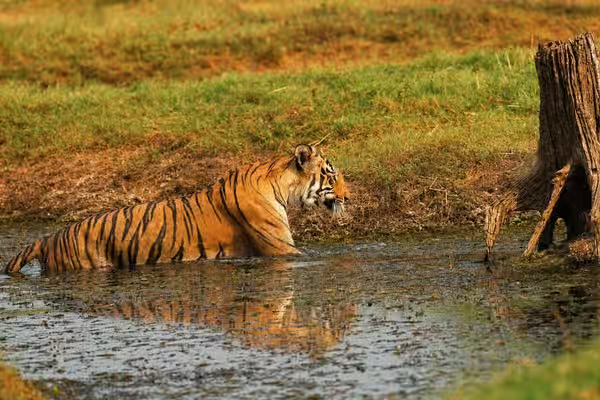
Most Indian Reserves Hide Their Tigers. Why Tadoba Can't.
Tadoba's tiger density is a fraction of Corbett's, yet sighting rates rank among India's highest. The gap between those facts is the real story.
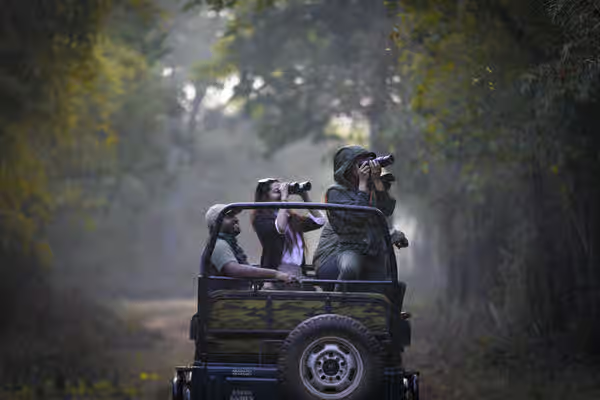
Where to See Tigers in India: Why We Picked These 16 Parks
Where are you most likely to see a real tiger in the wild? Sixteen parks matter for that question. How we chose them, and why Tadoba is the measure.
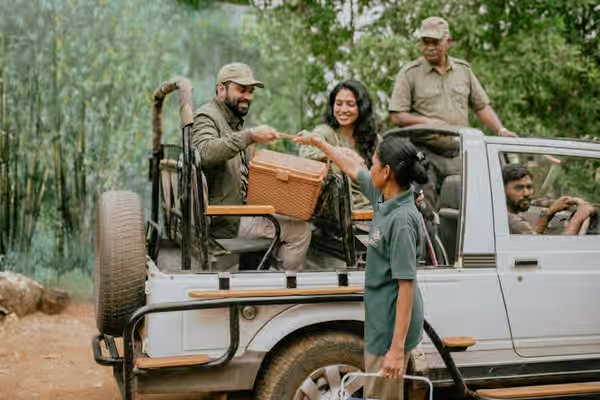
Core or Buffer Zone? What We Tell Our Guests
The hierarchy of core over buffer is one of the most persistent myths in Indian safari planning. Here is what actually matters.
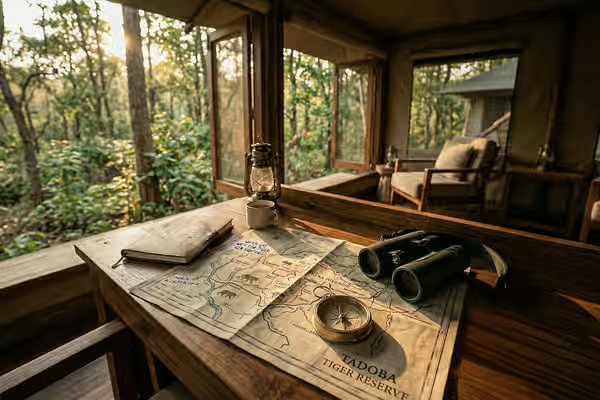
Tadoba Safari Gates: Where You Stay Changes Everything
Tadoba is larger than Greater London, yet most resorts sit by one gate. Where you stay decides your alarm, your drive, and what a 3-hour safari costs.
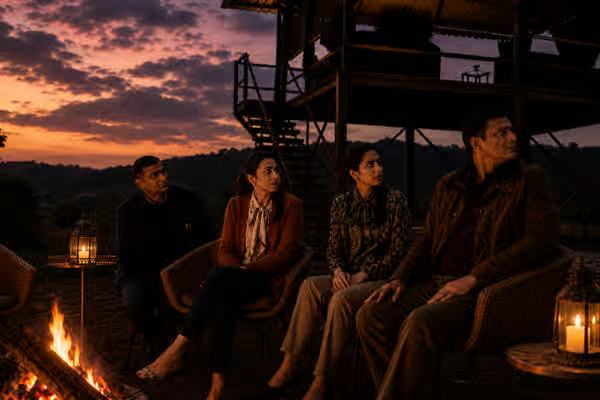
Tuning In: Why You Should Read Tadoba With Your Ears
Most guests arrive waiting to see the wildlife. The real secret is learning how to listen to it, especially after dark.
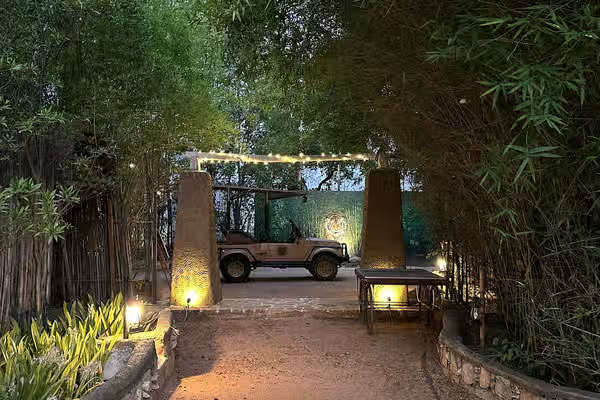
Two Full Bathrooms in Every Room? Why It Matters
Nobody should queue at 5am while the jeep waits outside. Why details like two full bathrooms matter, learned the hard way.
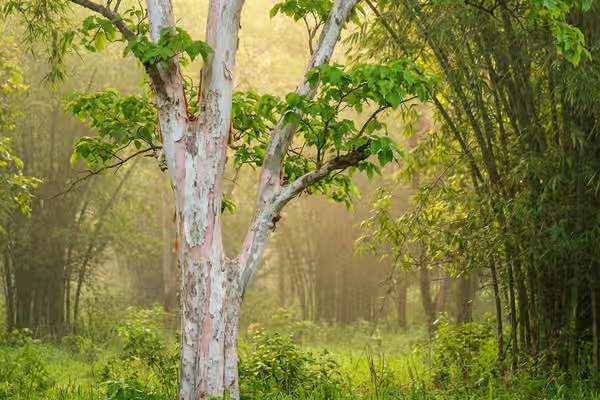
Tadoba's Climate Has Three Engines, Only One Is Warming
Why Tadoba's records look gentle while the planet warms. Fifty years of weather, half lived and half projected, and what El Niño does and does not decide.
Services & Guides
Five safari types bookable with Limban right now - headache free. Take your pick.
Jeep, canter and full-day routes across every gate, arranged end to end by our own team.
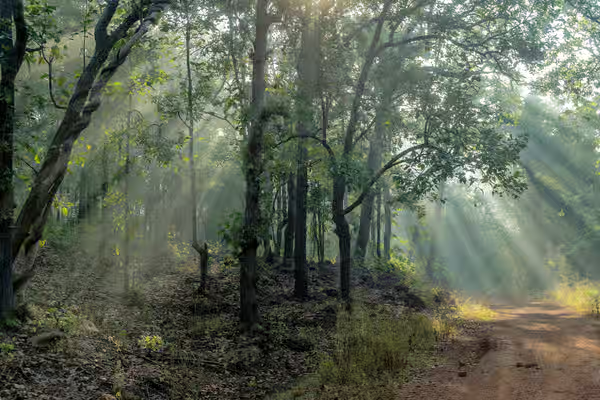
Your Tadoba Guide: History, Climate, Zones, Wildlife, Best Time to Visit and Handy Tips
Everything worth knowing about the reserve, kept current season by season by the Limban team.
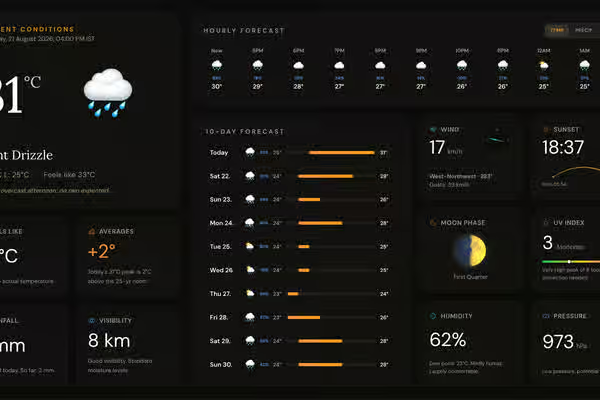
Live Weather Conditions, Accurate and Up-to-date 10-day Forecast for the Moharli Corridor.
Hourly forecasts, a ten-day outlook and safari-condition readouts, refreshed through the day.