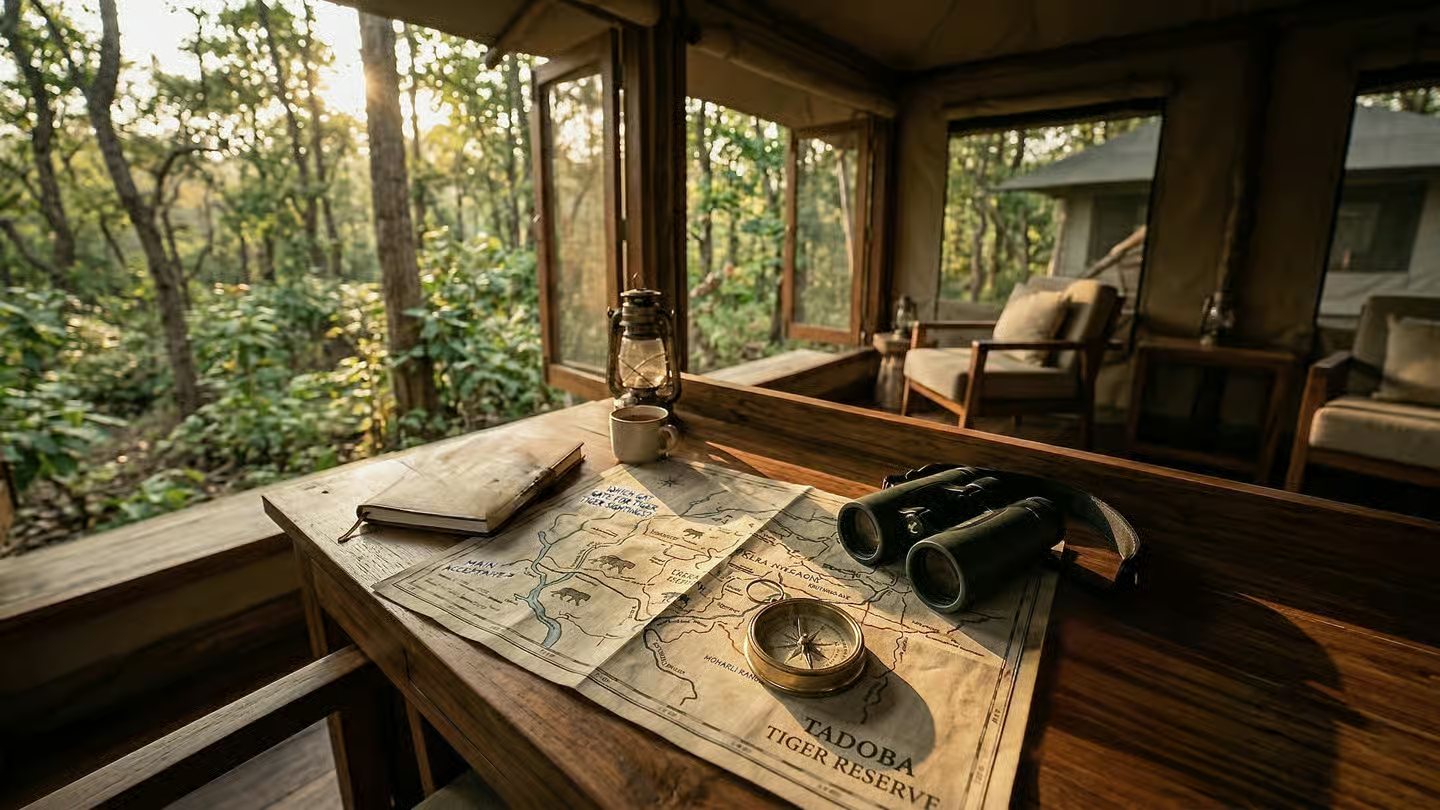
Tadoba SafariGate Map
Every gate. Every zone. Real drive times from Limban — not guesswork.
Drive times calculated with the OSRM routing engine from Limban Resort, Mudholi. Traffic, roadworks, weather and other conditions can change actual journey times.
Tadoba's Three Zones
Understanding the administrative structure of the reserve is the single most useful thing you can do before booking a safari.
Core Zone
The protected heart of the reserve and the oldest forest in Tadoba. Administratively, these areas are managed with fixed quotas and strictly regulated routes to preserve the integrity of the ecosystem. For guests, this translates to maximum tiger territory and some of the highest frequencies of predator sightings.
Buffer Zone
The ring of forest surrounding the core. Wildlife moves freely across these administrative boundaries; the ecology is continuous even if the rules change. For guests, the buffer often offers a more intimate sighting experience with fewer vehicles and more room to watch animal behaviour undisturbed.
Territorial Forest
Forests managed by the Territorial Division rather than the Tiger Reserve's Wildlife Wing. These contiguous areas offer a more rugged, unscripted safari experience with minimal vehicle traffic, ideal for guests seeking rawer encounters away from the structured circuits of the core.
Frequently Asked Questions
Common logistical queries about Tadoba safari gates
Moharli Core Gate is approximately 13 km from Limban Resort, about 25 min by road. It is Tadoba's most celebrated entry point and one of the closest Core gates to the resort.
Core zones are the heart of the reserve: high tiger density, tightest permit quotas, and the most sought-after safaris in India. Buffer zones share the same wildlife but with far fewer vehicles, offering quieter, more unhurried drives. Territorial forests are the wild fringes: raw teak habitat suited to serious trackers who value solitude over guaranteed sightings. See our core vs buffer explainer for the full picture.
A quick character sketch of every gate, from the core out to the boating water.
Khutwanda (Core · 15 min from Limban). The quiet door into the core: Khutwanda sees nothing like the traffic of the flagship gates, and the forest road in feels older for it.
Moharli (Core · 25 min from Limban). Tadoba's oldest gate and still its busiest, opening the south-western forest around Tadoba Lake, the heart of the original national park.
Navegaon (Core · 65 min from Limban). The second gate of the Chimur side, opening the north-eastern range where the reserve's hills climb and its grasslands open out.
Kolara (Core · 100 min from Limban). Kolara opens the reserve's north-eastern flank near Chimur, into the Tadoba range: legally the same contiguous core as Moharli's forest, but entered from the opposite corner.
Zari (Core · 112 min from Limban). One of the two gates into the Kolsa range, the wild southern half of the core where the forest closes overhead and the crowds thin out.
Pangdi (Core · 145 min from Limban). The remotest of the six core gates, on the reserve's south-western edge, sharing the Kolsa range with Zari.
Junona (Buffer · 22 min from Limban). Minutes from the Moharli core gate, Junona is the reserve's activity hub: kayaking on the Irai backwaters, bird machans and log-hut stays, all run under the forest department's ecotourism programme.
Agarzari (Buffer · 28 min from Limban). The family gate: Agarzari pairs its buffer safari with a butterfly conservatory, an adventure park, cycling trails and nature camping on the Chandrapur side of the Moharli belt.
Devada-Adegaon (Buffer · 32 min from Limban). Two neighbouring gates sold as one circuit on the Moharli side, Devada and Adegaon share farm-edge forest and a network of departmental cycling trails.
Nimdela (Buffer · 60 min from Limban). A small buffer gate on the Navegaon side, seeing a fraction of the traffic of its neighbours.
Mamla (Buffer · 90 min from Limban). Grouped administratively with the distant Pangdi and Zari gates rather than its nearer neighbours, a quirk of the official zone map worth knowing when permits open.
Ramdegi-Navegaon (Buffer · 70 min from Limban). On the Navegaon side, Ramdegi runs through open, forgiving country that suits a first safari or a slow birding morning.
Alizanja (Buffer · 100 min from Limban). Part of the ring of buffers around the Chimur hills on the Kolara side, Alizanja gets a modest allocation of vehicles and correspondingly quiet drives.
Keslaghat (Buffer · 90 min from Limban). The name says it: a ghat, a pass through hills, and the most scenic drive of any buffer route in the reserve.
Madnapur (Buffer · 90 min from Limban). One of the best-known buffer names in Tadoba, and rightly so: for over a decade the tigress Junabai and her daughters held these forests, a matriarch line documented year after year and now part of the reserve's modern history.
Zari Peth (Buffer · 100 min from Limban). Zari Peth takes its name from the market town at its doorstep, peth being the old word for a trading settlement, and the gate leads into the southern Kolsa belt below the core gates.
Belara (Buffer · 115 min from Limban). Opened as the fourteenth buffer gate, Belara added something new to the Kolara side: kayaking on still water beside the forest, with the department's boats and guides.
Kolara Chouradeo (Buffer · 115 min from Limban). The companion gate to Kolara core, sharing its Chimur approach and much of the character of the forest around it.
Sirkada (Buffer · 115 min from Limban). A little-used gate on the Kolara side, Sirkada's value is simple: the same Chimur-edge forest as its neighbours, with fewer vehicles than almost anywhere else.
Palasgaon (Buffer · 120 min from Limban). Tadoba's odd-hours gate: while every other entry works mornings and evenings, Palasgaon runs a midday slot, hours no other gate on the Kolara side offers.
Pangdi Aswal Chuha (Buffer · 150 min from Limban). The buffer partner of Pangdi core, serving the same quiet south-western corner of the reserve.
Somnath (Buffer · 163 min from Limban). Opened in July 2023 as the fifteenth buffer gate, Somnath brought tourism to the Mul range, hill forest south of the Kolsa with an old Shiva shrine on its summit ridge and a waterfall in season.
Chora-Tirwanja (Territorial · 35 min from Limban). The second territorial safari, opened weeks after Karwa in February 2021, and run with the joint forest management committee of Chora village, whose members guide and staff the operation.
Shedegaon (Territorial · 71 min from Limban). The territorial experiment reached the district's north-east in December 2024, when Shedegaon became the first territorial safari under the Bramhapuri forest division.
Lohara (Territorial · 95 min from Limban). Inaugurated in January 2026, Lohara is the newest gate in the reserve, a thirty-five-kilometre circuit laid through corridor forest on the Chandrapur side to draw visitors away from the busier zones.
Karwa (Territorial · 110 min from Limban). Where Tadoba's newest idea began: Karwa opened in January 2021 as the first territorial jungle safari in India, running through state forest outside the notified reserve where wildlife moves entirely on its own terms.
Irai Lake (Boating · 14 min from Limban). Not a gate at all in the safari sense: Irai is the reserve's boating water, the forest department's launches crossing the dam backwaters just outside Chandrapur.
Khutwanda Core Gate is the closest gate to Limban Resort at 6 km (approximately 15 min by road). Moharli Core Gate is also very close at 13 km.
Kolara Gate is approximately 69 km from Limban Resort, around 100 min by road. Guests choosing Kolara safaris should factor this into their pre-dawn departure schedule. Kolara is one of the highest-encounter zones in the reserve.
Yes. Guests at Limban Resort can access Core, Buffer, and Territorial zone gates. Drive times vary significantly, from 15 min to Khutwanda to over two hours for the furthest Territorial gates. Limban publishes OSRM-calculated travel times for every gate so guests can plan their pre-dawn departures realistically.
Yes. Your gates and your room are confirmed together before you arrive. We check the forest for your dates and the accommodation in the same conversation, so you arrive knowing your permits are secured, not hoping they will be. It's part of the Limban Safari Promise that shapes how every stay is planned.
Your Tadoba Safaris Secured,From a Resort Worth Staying At.
Two things decide a Tadoba trip: 1) Secure safari permits for gates that actually matter. 2) Find accommodation strategically located near those gates. We help you with both — in one conversation.
Room reservations are obligation-free. No credit card needed.