Core or Buffer Zone? What We Tell Our Guests
The hierarchy of core over buffer is one of the most persistent myths in Indian safari planning. Here is what actually matters.

Archana Bhagat Schäfer
Published 10 March 2026 · 5 min read
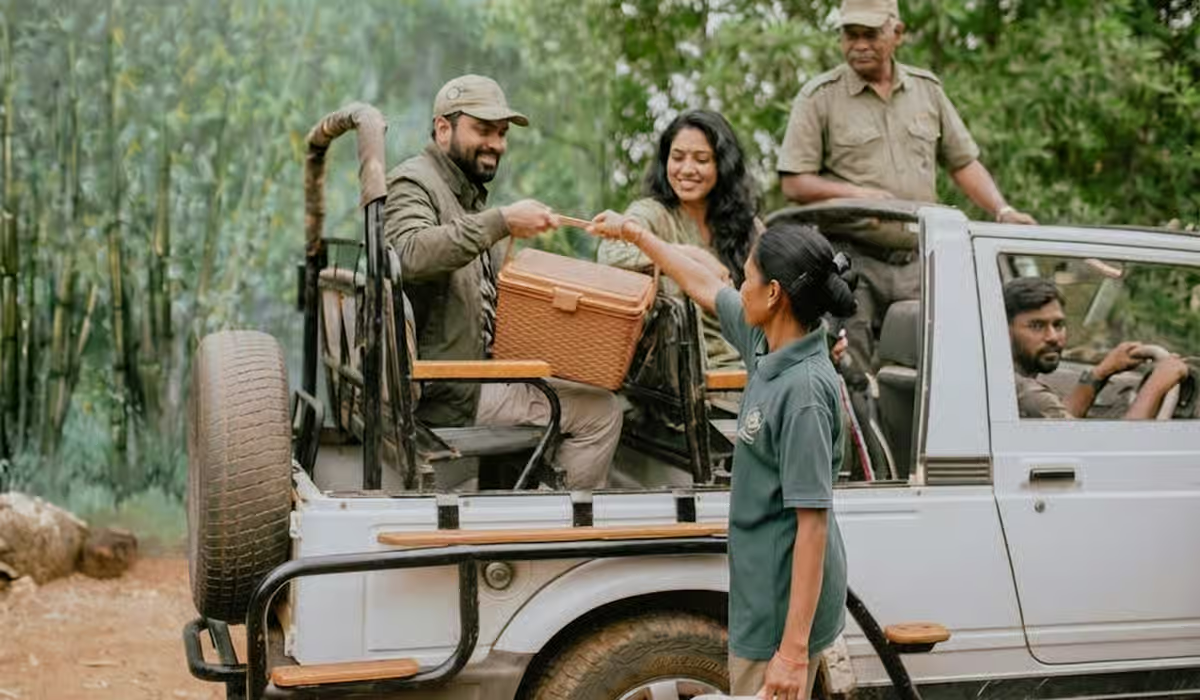
There is a question that arrives in almost every serious enquiry about staying at Limban. Not about the rooms, not about the food. It surfaces once we start talking about dates and safari slots, which is always where we start, and it goes something like this:
"What's the difference between core zone and buffer zone in Tadoba? And which one should we actually be booking? And while we're at it, what are these other safaris more and more people seem to be talking about?"
Fair questions. Badly answered, almost everywhere.
Somewhere along the way the idea took hold that this is a hierarchy: core is the real Tadoba Andhari Tiger Reserve, buffer is what you settle for when the real thing has sold out. It sounds logical. It also misses the point entirely, and in missing it, has sent a significant number of guests to Tadoba with the wrong permits for the wrong gates on the wrong mornings, wondering what went wrong.
This post is our attempt to correct that.
We always start with safaris
At Limban, we do not begin with room availability. We begin with safaris.
Not because it makes a better sales line (it doesn't, it makes us harder to book) but because there is no honest alternative. Safari permits at Tadoba are issued by the Forest Department, allocated per gate, per session, per day, and once the quota is gone it is gone.
No resort, no agent, and no amount of money manufactures more. Which means if we confirm your stay before establishing what the forest can actually offer on your dates, we are building your trip on a foundation that may not exist.
The first conversation is therefore always this: what is realistically possible? Sometimes the answer is everything you hoped for.
Sometimes we have to tell someone, gently, that their preferred combination has closed or that their dates fall across a session gap or a gate rotation that will compromise what they came for. We would always rather have that conversation before you pack than after you arrive.
This is also why Limban does not list on booking platforms. It means we are harder to find. It also means no guest has arrived here and been told the safari they came for is unavailable.
What the core zone actually is
The core zone is the protected heart of Tadoba Andhari Tiger Reserve: the older, denser forest, the established tiger territories, the landscape most people picture when the reserve comes up in conversation. That reputation is not invented.
Khutwanda, our closest core gate, is within easy reach of the resort and offers terrain that rewards patience: drier in the lean months, dramatic along the seasonal streambeds, and less trafficked than most.
Moharli, also close and equally important to how we plan safaris, is one of the most consistently productive areas in Central India. The forest there is mature, the animal corridors are well established, and for guests who have been reading about Tadoba for years, a drive through Moharli delivers precisely the experience they came for.
If core safaris at either gate are what your trip has been building towards, we understand it completely and will do everything we can to secure them.
But there is something we tell our guests that they often never hear from anyone else involved in planning a Tadoba trip.
What the buffer zone actually is
The buffer zone is the outer ring of Tadoba Andhari Tiger Reserve. Larger than the core, newer to tourism, and spread across multiple gates with genuinely different characters: different terrain, different sighting patterns, different mornings entirely.
From Limban, buffer gates including Devada-Adegaon, Junona, and Agarzari are all within 35 minutes. The terrain near our closest buffer gates runs through dry teak forest and seasonal streambeds. In April and May especially, tiger movement here can be extraordinary, precisely because the animals are concentrating around shrinking water sources, the same dynamic that makes peak summer in Tadoba so compelling.
Here is what many first-time visitors do not account for: a popular core gate on a morning with good sighting news draws every available vehicle within two kilometres. The track fills. The tiger, if she holds, ends up surrounded. The vehicles queue, the photographs are taken, the moment gets logged, and the convoy moves on.
In the buffer, when something happens, it tends to happen with room around it. That is not a consolation. For many guests — particularly those who have experienced both — it becomes a genuine preference.
The buffer is not the fallback. It is a different forest, with different rules, and on the right morning at the right gate, it is the better morning.
Territorial Safaris - nobody tells you about
There is a third category of safari in and around Tadoba that most guests never hear about. Not because it does not exist. Not because the forest is inferior. But because the economics of the tourism industry around Tadoba are rather 'interesting'. We won't get into the details here.
These safaris take place in forest that borders and connects with the reserve itself. Administratively, some of these areas fall under different forest authorities: Chandrapur Forest Division, the Forest Development Corporation of Maharashtra, and others depending on the specific area. The boundary on paper means nothing to the wildlife. Tigers, leopards, wild dogs, and the full complement of species that Tadoba is known for move through this landscape without consulting a zoning map.
What is different is the experience. There are no fixed circuits here. No timed convoys, no designated tourist loops, and significantly fewer vehicles sharing the forest with you. A guide and a gypsy, moving through contiguous forest, tracking signs rather than following a known rotation.
For the first-time visitor who wants the highest probability of a tiger sighting, the core zone is still where you begin. But for a guest who has already done a structured safari and wants something that feels genuinely unmanaged, or for a wildlife photographer who values empty frames and undisturbed animal behaviour over sighting frequency, a morning in this forest can be the most memorable drive of the entire trip.
What our location gives you
This is where the conversation stops being abstract.
Limban sits in a part of Tadoba where the choice is not between one serious option and one fallback. Khutwanda and Moharli, both core gates, are within easy reach. Four buffer zone gates are within 35 minutes. For longer stays, Navegaon's wetlands to the north and Zari Peth's terrain to the south open up within a comfortable morning drive, alongside Mamla and Nimdela for guests who want to cover the reserve with any depth.
But zone type is only one dimension of how time in the forest can be spent. The Irai Lake boat safari at Sitarampeth (a leisure 14-minute drive from Limban), where marsh crocodiles and painted storks move through still water that carries the treeline back at you in the early light, is an experience no jeep drive approaches.
Full-day dawn-to-dusk safaris suit the guest who wants maximum hours in the forest and is willing to let the day dictate its own pace. Photographic safaris run with fewer vehicles, modified seating, and guides who are thinking about light and animal behaviour rather than the quickest route to a sighting.
Tadoba's grasslands, bamboo edges, and forest corridors hold over 280 recorded bird species, and there are mornings here that have nothing whatsoever to do with tigers.
We have had guests arrive absolutely certain they came for the big cat experience. One told us, on the last morning, that the boat at dawn on Irai Lake was the highlight of the entire trip. She had not expected it. The best itineraries leave room for that.
So what do we actually tell guests?
We tell them to stop chasing the core label.
If core zone safaris are what you came for, we will try to make them happen. But if the anxiety is simply that a buffer safari might be an inferior experience, the honest answer is: not in Tadoba, and not at the right gate in the right season. The zone designation on its own tells you almost nothing useful.
What actually determines the quality of your safari is the specific gate, the specific session, the season, and whether someone has read the forest carefully enough to know what is worth pursuing on your particular dates.
Peak summer concentrates tiger activity around shrinking waterholes. Winter mornings favour the denser core forest. The shoulder months open different gates entirely. Current, specific intelligence about what the forest is doing at the time of your visit is what turns a competent itinerary into the right one.
The forest does not know what we call a core or a buffer. Tigers do not read the Forest Department's zoning maps. They move where the forest takes them, which is sometimes deep in what the permit calls buffer, and sometimes in terrain that no booking platform has ever listed.
What guests remember is not whether the permit said core or buffer. It is the quality of the morning, the knowledge in the vehicle, and whether someone helped them choose well before they arrived.
That is why we always start with the safaris.
Planning a visit to Tadoba? The conversation starts here, before dates, before deposits, before anything is confirmed. Tell us what you are looking for →
More Interesting Reads
Most Indian Reserves Hide Their Tigers. Why Tadoba Can't.
Tadoba's tiger density is a fraction of Corbett's, yet sighting rates rank among India's highest. The gap between those facts is the real story.
Where to See Tigers in India: Why We Picked These 16 Parks
Where are you most likely to see a real tiger in the wild? Sixteen parks matter for that question. How we chose them, and why Tadoba is the measure.
The Birding Safari at Tadoba: Why It Deserves a Trip of Its Own
Over 280 documented species in an IBA-designated forest, and mornings with nothing to do with tigers. Central India's most overlooked wildlife experience.
Tadoba Safari Gates: Where You Stay Changes Everything
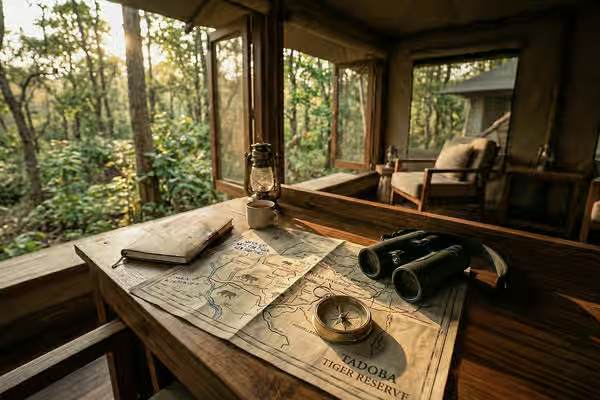
Tadoba is larger than Greater London, yet most resorts sit by one gate. Where you stay decides your alarm, your drive, and what a 3-hour safari costs.
Tuning In: Why You Should Read Tadoba With Your Ears
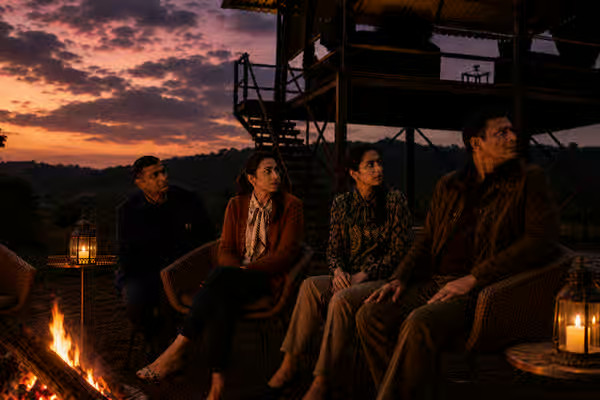
Most guests arrive waiting to see the wildlife. The real secret is learning how to listen to it, especially after dark.
Two Full Bathrooms in Every Room? Why It Matters
Nobody should queue at 5am while the jeep waits outside. Why details like two full bathrooms matter, learned the hard way.
Tadoba's Climate Has Three Engines, Only One Is Warming
Why Tadoba's records look gentle while the planet warms. Fifty years of weather, half lived and half projected, and what El Niño does and does not decide.
Services & Guides
Five safari types bookable with Limban right now - headache free. Take your pick.
Jeep, canter and full-day routes across every gate, arranged end to end by our own team.
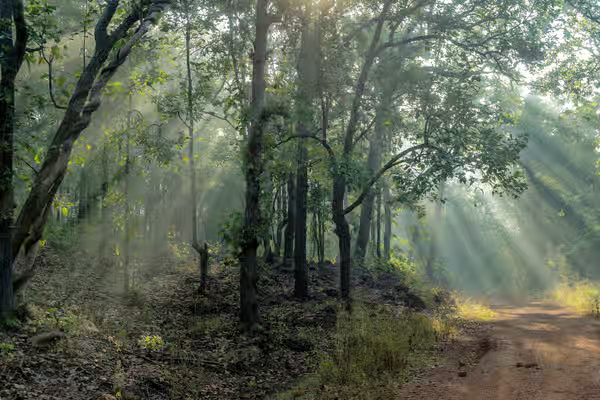
Your Tadoba Guide: History, Climate, Zones, Wildlife, Best Time to Visit and Handy Tips
Everything worth knowing about the reserve, kept current season by season by the Limban team.
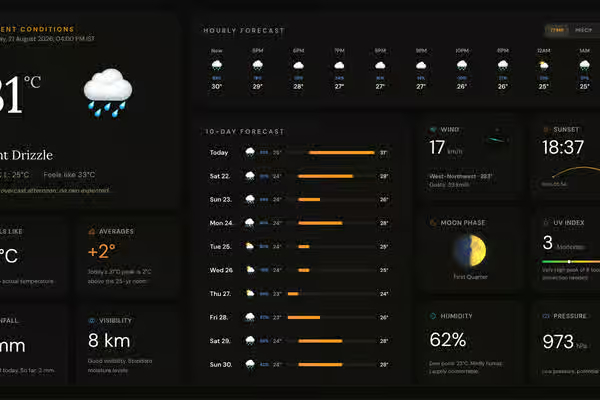
Live Weather Conditions, Accurate and Up-to-date 10-day Forecast for the Moharli Corridor.
Hourly forecasts, a ten-day outlook and safari-condition readouts, refreshed through the day.