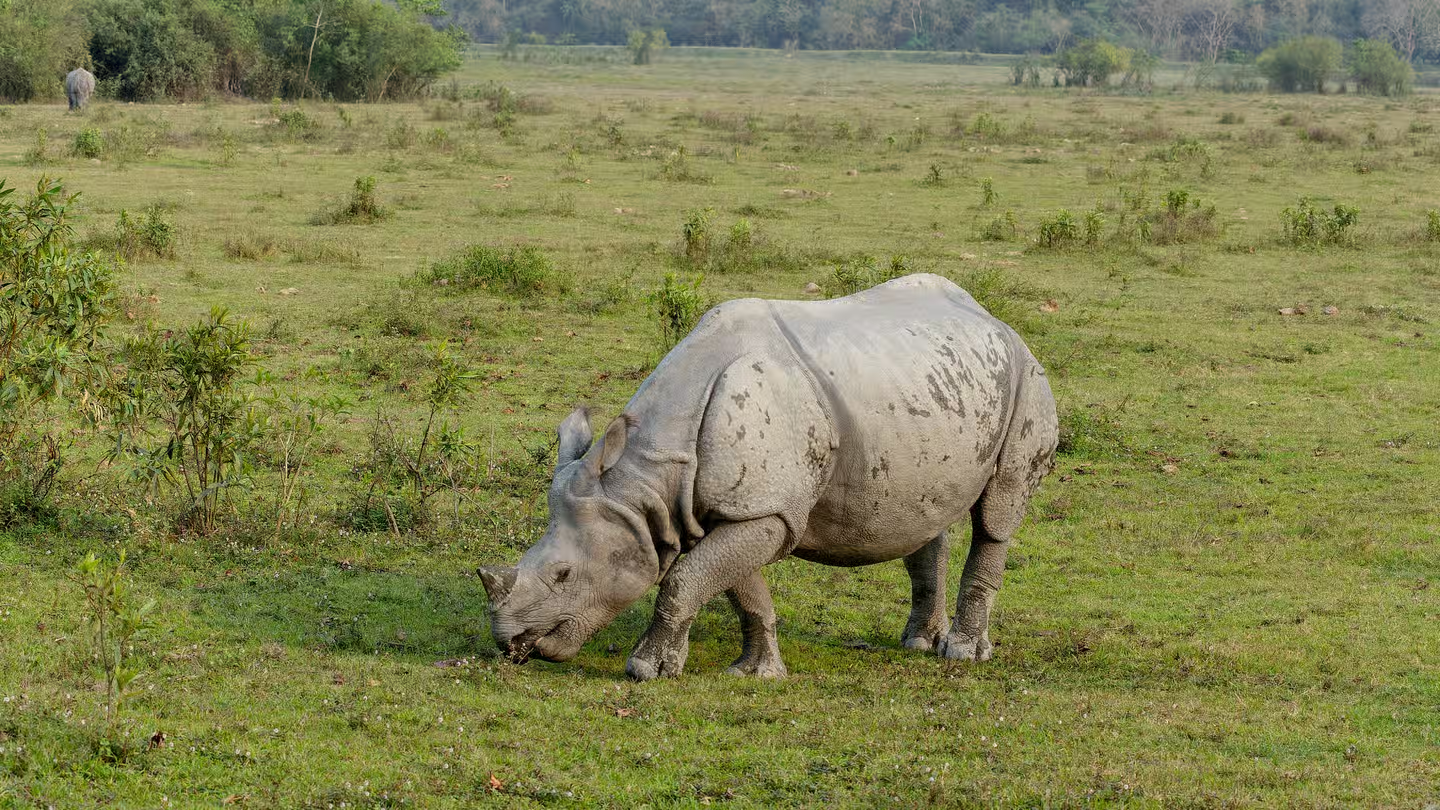
Kaziranga National Park at dawn: the elephant beneath you has stopped without being asked. Twenty metres ahead, half-hidden in mist the colour of milk, a one-horned rhinoceros is grazing with a calf at her side. The mahout says nothing. There is nothing to add. Somewhere in this same grass, in numbers that would make a central Indian warden envious, there are tigers. You will almost certainly not see one. Nobody on this elephant will mention that either, because nobody came for tigers.
That sentence is the whole comparison. Kaziranga National Park is the greatest wildlife spectacle in India that is not, primarily, about tigers.
The ark
The figures first, because they are staggering. Roughly two-thirds of the world's one-horned rhinoceroses live in this one floodplain, more than 2,600 counted in 2022, alongside around a thousand wild elephants, wild water buffalo, swamp deer, and some five hundred bird species. The Brahmaputra made all of it: every monsoon the river takes the park back, drowning the grass in brown water, and every winter it returns it green and grazed. The flood is not a disaster here. It is the management plan, and the reason the park shuts entirely from May to October.
This is also a UNESCO World Heritage Site, and unlike most such listings, the plaque undersells the place. There is nowhere else on earth where you watch rhinos, elephants, buffalo and deer in a single morning drive as a matter of routine.
Four ranges, two safaris
Kaziranga runs four ranges, and choosing between them matters more than most first-timers realise. Kohora, the central range, is the balanced pick: reliable rhinos, open grass, both safari types. Bagori in the west holds the densest rhino concentrations and the wilder, bumpier, more rewarding drives. Agoratoli in the east is the quiet one: wetlands, wintering geese by the ten thousand, the park's best birding, and a boat safari option no other range offers. Burapahar in the far west is hill forest rather than floodplain, with hoolock gibbons, hornbills, and even guided trekking on the buffer boundary.
Two safari modes, honestly described. The elephant safari at dawn gets you fabulously close to grazing rhinos in grass a jeep cannot enter. It runs in Kohora and Bagori only, in two one-hour slots, and seats are limited enough that you queue the previous evening. The jeep safari covers all four ranges over two and a half hours and is the better all-round instrument. One honest note for the welfare-conscious: skipping the elephant ride loses you nothing essential. The jeep alone delivers the complete Kaziranga.
The tigers nobody sees
Now the number this post exists to contextualise. The last national count put Kaziranga's tigers at 104, and a subsequent 2024 state count found 148 adults at 18.65 per hundred square kilometres: Corbett territory, Bandipur territory. More than a hundred tigers in one park, and the sighting reports read like a rumour mill. The grass that feeds the rhinos hides the cats with total professionalism. Even the celebrated golden colour variant photographed in Bagori is a story about a photograph, not an encounter.
Agoratoli carries the reputation as the tiger range, and patient visitors do connect, mostly on winter mornings. But no honest operator promises it, and the community sighting logs confirm the pattern: rhinos near-guaranteed, tigers a persistent maybe. If your trip succeeds or fails on a tiger, this paragraph is the most important one on the page, and it points south to Tadoba.
Getting there, and why it is two trips
Fly to Guwahati, drive four to four and a half hours east on good highway, and you are at Kohora. Jorhat shaves it to two hours for the eastern ranges. Against Tadoba's Nagpur run, the logistics rhyme. The trips do not combine: Assam and central India share neither airports nor itineraries, and Kaziranga's October-to-April window overlaps Tadoba's season without ever touching its circuit. From Limban the position is simple. Kaziranga is another holiday, planned separately, flown separately, worth every minute.
When to go, and how far ahead to book
November to February is the classic window: cool air, low grass, peak wildlife, peak crowds. March and April thin the crowds and improve visibility further as the department burns dry grass patches and animals gather at permanent water. May onwards the river returns and the park closes. Booking runs on a shorter fuse than the central parks: jeep permits open roughly thirty days out through the Assam portal, elephant seats are allotted near the date, and confirmation sometimes finalises the evening before. Plan the season, not the spreadsheet.
So which one
Here is the conditional verdict this series promises, stated plainly. If you are making one trip to India and want rhinos, elephants, buffalo, gibbons, ten thousand geese and the single greatest mammal spectacle in Asia, with tigers as a possible bonus, Kaziranga wins outright and Tadoba is not in the conversation. We concede the ark without qualification.
If tigers are the point of the trip, the conversation reverses completely. A hundred hidden tigers against ninety-five that show themselves is not a contest; it is a lesson in what density conceals. Comparing more than these two parks? All fifteen Tadoba verdicts stand side by side in the India Tiger Parks series. The question is always what the forest lets you meet.
Come for the ark, or come for the tiger. Knowing which hunger brought you is the entire decision.
Planning a Tadoba safari?
If Tadoba is your destination, stay at Limban and safari from Limban. Tell us your dates and we plan both halves together: room and forest, confirmed before you arrive. Start the Conversation →