Dudhwa Tiger Reserve is the one park in this series you arrive at by rail. The train comes through the forest at walking pace, glass-domed coaches full of faces pressed to the windows, and for twenty minutes the railway is a safari: sal trunks sliding past, a swamp deer herd lifting their heads in unison, the Gerua river flashing between the trees. The Vistadome runs Mailani to Bichia through Katarniaghat, and there is nothing else like it in Indian wildlife tourism. No other park in this series arrives by rail.
Dudhwa is the far edge of the map most Tadoba travellers never unfold. That is precisely why it belongs in this series.
Three parks in a trench coat
Dudhwa Tiger Reserve is really three protected areas plus the forests between: Dudhwa National Park proper, Kishanpur Wildlife Sanctuary, and Katarniaghat across the landscape toward Bahraich, all pressed against the Nepal border in the terai arc. Tigers move through the whole complex, 135 in the last national count, and the supporting cast reads like a northern greatest-hits album.
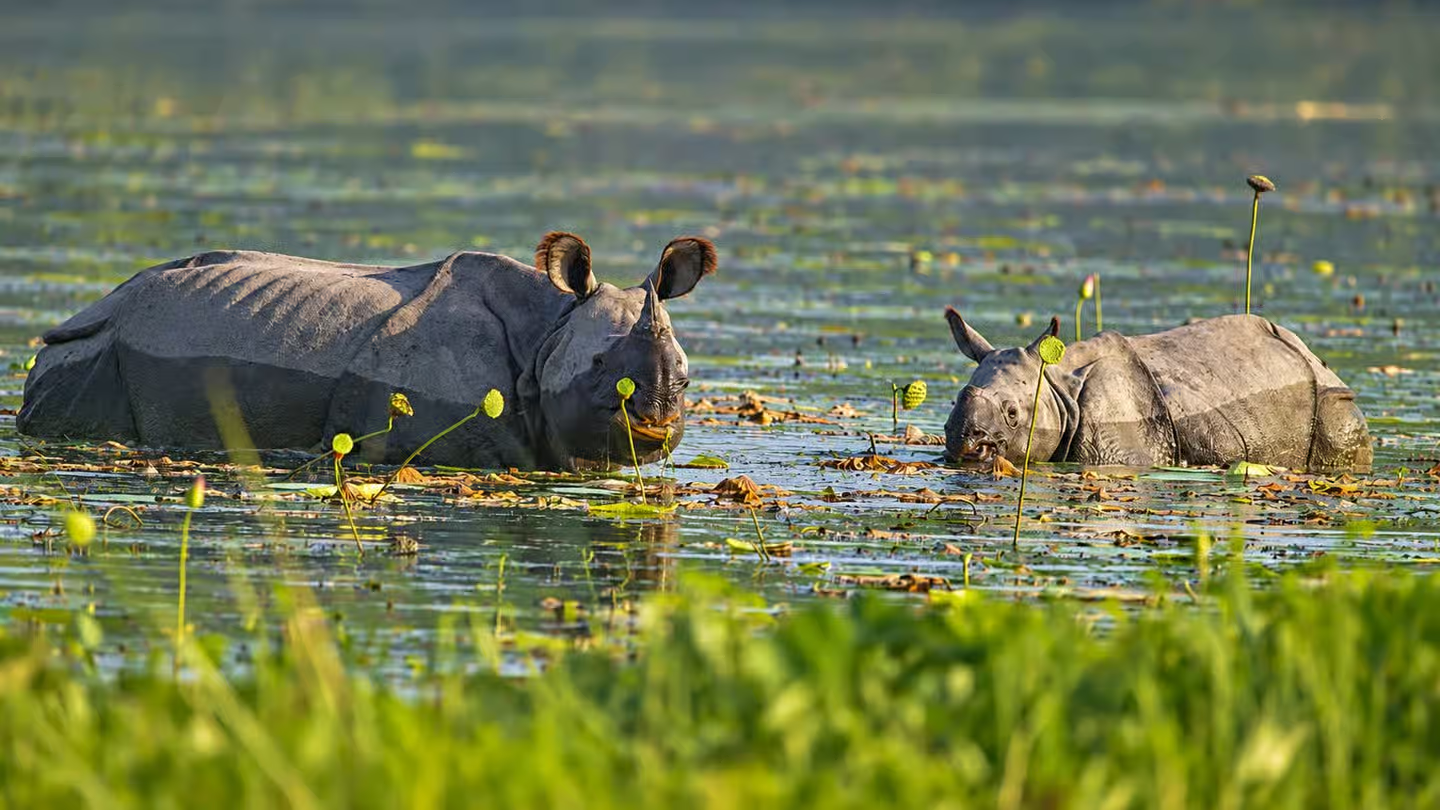
Kishanpur holds the nominate northern swamp deer in what the reserve's own assessments call potentially the country's most viable population of the subspecies, plus tigers at its Jhadi Taal grasslands. The rhinos live next door in Dudhwa National Park proper: reintroduced in 1984 from Assam founders, around forty-six counted recently, the only rhinos in northern India outside Assam. Katarniaghat holds the rivers: gharials and muggers in the Gerua, Gangetic dolphins surfacing where the forest meets the water, and a boat-and-jeep combination no central park offers. Three units, three safaris, one reserve.
The terai honest account
Now the ledger, kept the way this series keeps it. Dudhwa's tigers live in tall terai grass and swamp forest of exactly the kind that hides cats professionally: the Corbett problem transplanted north, without Corbett's chaur openings to compensate. Sighting odds run well below Tadoba's, and the infrastructure around them is thinner: fewer vehicles, fewer naturalists of the top tier, permits through the state ecotourism portal on a sixty-day fuse, villages inside the core and a porous international border keeping protection honest the hard way.
What the terai gives back is everything else. Bengal floricans and hispid hares for the list-keepers, both critically endangered and both essentially a Dudhwa-Kaziranga specialty. Fishing cats, otters, hog deer, five deer species in one reserve. The birding alone justifies the journey for the right traveller. And the remoteness that costs sightings pays atmosphere: sugarcane fields giving way to sal, the border hills beyond, a forest that feels undiscovered because, by the standards of this series, it is.
Getting there is the trip
Fly to Lucknow, drive five to five and a half hours northeast through country that gets progressively more interesting, and you are at Palia. Palia Kalan station sits ten kilometres from the gate. Against Tadoba it is a different state, a different airport, a different holiday, full stop. Nobody combines these parks. From Limban: plan separately or not at all.
When to go
Mid-November to mid-June, winter for comfort and birds, May and June for cats near water. The monsoon closes it properly. Book the winter weekends early; the permit pool is shallow.
So which one
Dudhwa for the terai specialist: rhinos and barasingha and floricans and dolphins in one frontier reserve, rail safaris, border atmosphere, the far edge of the map most travellers never unfold. If your life list has gaps only the terai fills, this is your park and Tadoba cannot help you.
Tadoba for tigers as the premise: the readable forest against the tall grass, the appointment against the rumour. Comparing more than these two parks? All fifteen Tadoba verdicts stand side by side in the India Tiger Parks series. Tall grass feeds cats. Open forest shows them.
Planning a Tadoba safari?
If Tadoba is your destination, stay at Limban and safari from Limban. Tell us your dates and we plan both halves together: room and forest, confirmed before you arrive. Start the Conversation →