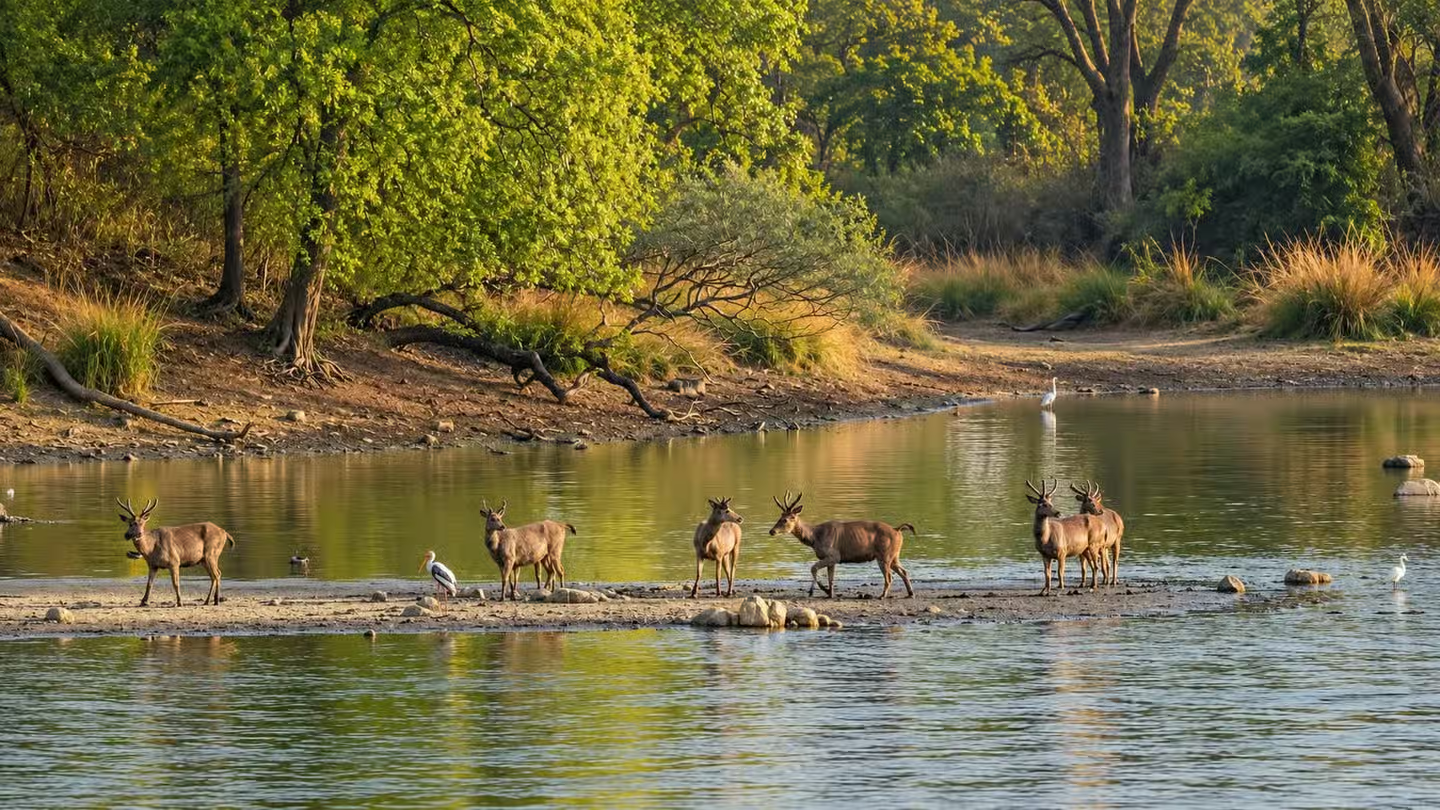
Bandipur Tiger Reserve stops traffic on the Mysore-Ooty highway late in the afternoon, for reasons no sign explains. Ahead, in the slanting light, thirty elephants are crossing toward Mudumalai: cows, calves, two tuskers bringing up the rear with the unhurried confidence of animals that own the road. Nobody photographs this and calls it a consolation sighting. In the south, this is the main event, and the tiger that may or may not appear at dawn is the bonus feature.
That inversion is the whole comparison. Bandipur Tiger Reserve has the numbers. Tadoba has the appointments.
The southern count
The figures command respect. The last national count put Bandipur's tigers at 150, with field talk running higher since, and the published density figure sits near 19.83 per hundred square kilometres: the same rarefied air as Corbett and Kaziranga. Behind the cats stand more than three thousand elephants, massive gaur herds, dholes, and leopards, in 868 square kilometres of dry deciduous teak and rosewood that was once the Mysore maharajas' hunting preserve and became one of Project Tiger's first nine reserves in 1974.
The geography matters as much as the arithmetic. Bandipur shares unfenced borders with Nagarhole, Wayanad and Mudumalai: a contiguous Nilgiri wilderness of over five thousand square kilometres, arguably the most genetically viable tiger habitat on the planet. Nothing in central India offers that scale of connected forest. The count is real, the landscape behind it is real, and none of what follows disputes either.
Gypsies, buses and the highway
Bandipur runs two safari currencies. The open gypsy takes six guests down interior tracks with a tracker, following pugmarks and alarm calls the way it is done everywhere serious. The twenty-seat canter bus runs the wide circuits at a fraction of the price, with the height advantage that makes elephant herds and gaur spectacular and tigers a matter of luck and glass. Morning and evening shifts, waterholes like Tavarekatte in summer, the Gopalaswamy Betta hill rising over it all. As systems go, it is mature and honest.
Then the pressure, which no brochure leads with. A national highway runs through the core, and the night closure that protects it, nine in the evening to six in the morning, is live politics as we write: court-upheld, statistically vindicated in roadkill figures, and challenged anyway. In October 2025 the state cut a safari shift from both Bandipur and Nagarhole after unregulated tourism and village conflict around the belt. Add the weekend crowds out of Bengaluru, and the celebrated southern safari starts to resemble, in miniature, the overcrowding story we documented at Bandhavgarh. Success draws vehicles everywhere. The south is not exempt.
What the cats do in there
Here is where the density argument meets the forest. Bandipur's teak is beautiful and largely opaque: thorn scrub understorey, bamboo brakes, lantana-choked floor in stretches. Tigers move through it the way they move through Corbett's grass, well-fed and well-hidden. Summer thins it and concentrates everything at water, and March to May mornings around the dams produce the sightings the reputation rests on. But the encounter has a different texture than Tadoba's: more often glimpsed crossing a fireline, less often walked with at a waterhole, and shared with more vehicles when it happens.
The supporting cast, meanwhile, outshines almost anything in central India. Gaur bulls the size of small cars. Dhole packs working the scrub in daylight. Elephants in numbers Tadoba never assembles. A Bandipur morning without a tiger is still a spectacular morning. A Tadoba morning without a tiger is a rarer event. That asymmetry is the decision.
Getting there, and the southern circuit
Fly to Bengaluru, drive four and a half to five hours southwest, or base in Mysuru and make it two. The logistics are easy and the pairing options are the real prize: Bandipur folds naturally into Ooty, Wayanad, Mudumalai and Kabini, a southern circuit no central park can offer. Against Tadoba it is a different holiday on a different airport, planned separately. From Limban: not combinable, full stop.
When to go, and how far ahead to book
March to May for the cats, October to February for everything else in comfort, monsoon green and operating in between. Gypsy quotas are tight and weekend slots go early through the state portal; the canter absorbs the overflow. Book the gypsy the way you would a Tala permit: early, and without assuming a second chance.
So which one
Bandipur for the southern circuit and the big-mammal spectacle: elephants by the dozen, gaur, dholes, the Nilgiri biosphere at its richest, tigers as the possible crown. If your trip already points at Mysuru or Ooty, this is your park and the argument is over.
Tadoba for the tiger as the premise rather than the bonus: readable forest, waterhole appointments, tight vehicle limits, buffers that produce. Comparing more than these two parks? All fifteen Tadoba verdicts stand side by side in the India Tiger Parks series. Density fills the forest. Only the forest decides what you meet.
Planning a Tadoba safari?
If Tadoba is your destination, stay at Limban and safari from Limban. Tell us your dates and we plan both halves together: room and forest, confirmed before you arrive. Start the Conversation →