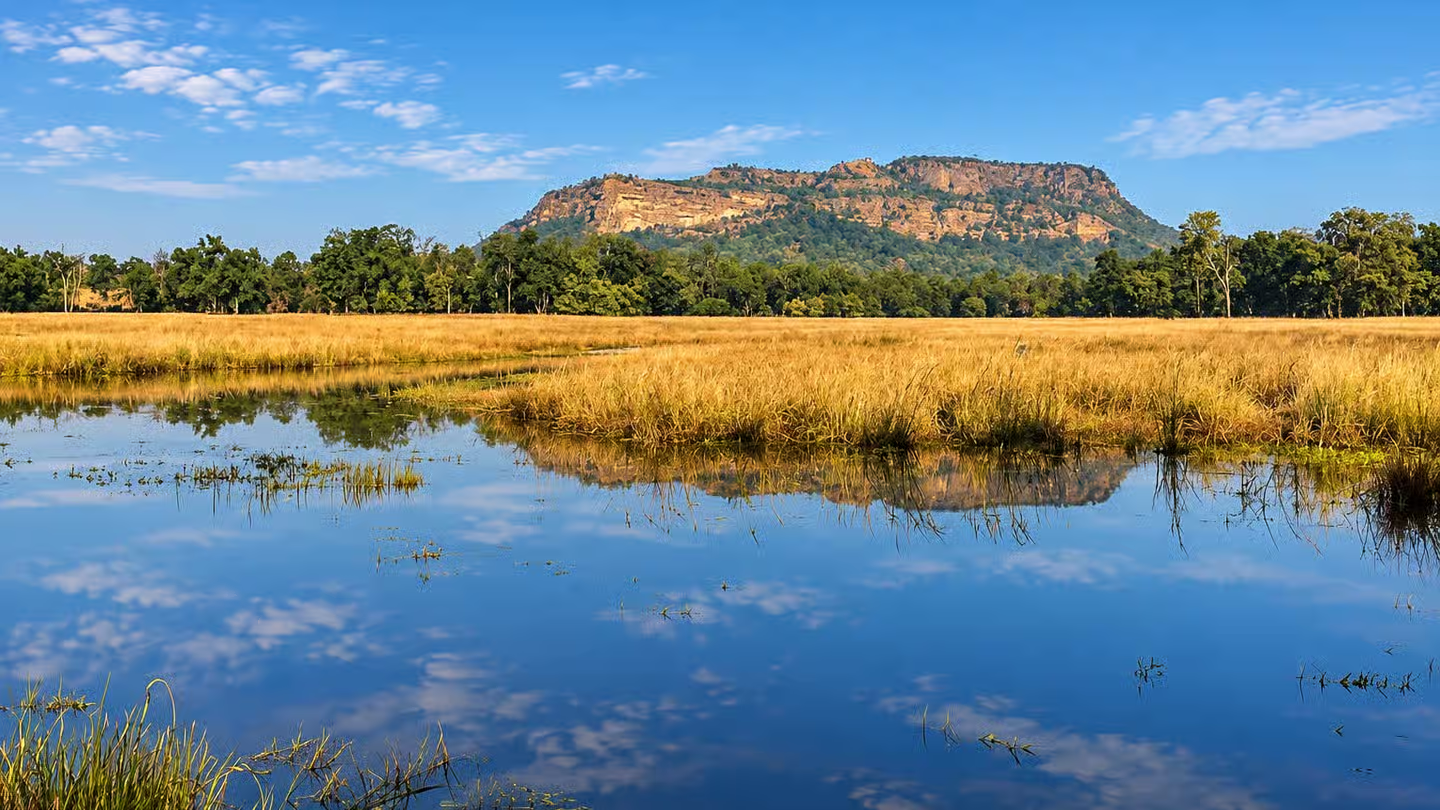
Bandhavgarh Tiger Reserve is where every tiger conversation in India eventually arrives. The density records. The bloodlines: Charger, B2, a dynasty of famous males. The fort on the hill, the meadows below it, the sense of a park that has been producing legends since before most of today's reserves had tigers worth naming. People do not compare other parks to Bandhavgarh. They measure them against it.
So let us measure. Not reputations against reputations, but trips against trips: permits against permits, mornings against mornings, logistics against logistics. Because Bandhavgarh is the park people dream about, and Tadoba is the park where they see tigers, and those turn out to be different things.
What the numbers tell you and what they do not
Bandhavgarh's trajectory is the great success story of modern Indian conservation, and it should be stated at full volume before anything else. The national estimation recorded 63 tigers in 2014, 124 in 2018, and 135 in 2022. Field staff quoted in the regional press, counting a bumper cub crop, spoke of something near 200 by the middle of 2025. If the next national count confirms anything like that, Bandhavgarh stands among the top three tiger reserves on earth.
Now the part nobody puts in the brochure. A reserve that triples its tigers in a decade without tripling its forest is running an experiment, and the early results are visible. Season reporting from 2024 onwards describes territorial fights killing tigers outright: a dominant male died of his injuries that December, and the intruder that followed destroyed litters across Khitauli before being trapped and moved. Field analyses put buffer cattle kills at around two thousand a year.
The prey base is being squeezed from the other end. Thousands of chital, the principal prey, have been translocated out to stock other reserves since 2015, while sixty-odd elephants and a reintroduced gaur herd nearing two hundred head compete for the same forage inside. None of this is mismanagement. It is arithmetic. Success, compounded past the carrying capacity.
Tadoba's numbers tell the quieter story: 97 in the 2022 national round, 95 adults camera-trapped in the 2024 Phase IV monitoring alongside 41 cubs and sub-adults, growth tracking the national rate almost exactly. A population rising inside its means, with room left in the buffers. There is such a thing as a healthy trajectory, and it does not always belong to the famous park.
The zone lottery
Bandhavgarh runs three core zones, and choosing between them matters more than choosing the park. Tala, the original hundred-square-kilometre heart with the fort and the famous meadows, is back to its best: the reigning male holding court from Chakradhara to Sidd Baba, new litters settling in, the old magic restored. Its twenty-eight morning vehicles sell out weeks ahead in season, and a Tala sighting with twenty-seven other jeeps is a different memory than the photographs suggest.
Magadhi, the photographer's favourite for its open grasslands, has endured two dull seasons in a row. Khitauli, the quiet one, promised everything in the winter of 2024 and then collapsed into the territorial chaos described above; it is recovering, resilient as ever, but recovery is not a booking strategy. Three buffers sit behind the core zones for the overflow.
Understand what this means for planning. In Bandhavgarh, the zone decides your trip. Book Tala late and you are choosing between Magadhi's patience game and Khitauli's convalescence, at premium effort, with no recourse.
Tadoba's answer is depth. Six core gates and sixteen buffers, with dozens of tigers living entirely outside the core, means the question is never which single zone saves the trip. Moharli full means Kolara, or Navegaon, or Agarzari, or Alizanza, each with recent form. A lottery with twenty-two tickets is barely a lottery at all.
The tigers themselves
Give the legend its due. Bandhavgarh's cats are the most watched individuals in the wild tiger world: the Tala male's endless rounds, the reigning mothers like Dotty raising hidden litters under the noses of tracking jeeps, the Chakradhara youngsters coming of age. For the repeat visitor who follows bloodlines the way others follow cricket, there is nothing like it. The meadows at dawn, a tigress crossing open grass with cubs in line behind her, is the single most beautiful standard sighting in Indian wildlife. When it happens, nothing at Tadoba touches it.
Tadoba's cats are less famous and more available. The legacy of Maya around Tadoba Lake, Matkasur's line, daughters of Choti Tara raising litters within earshot of the Moharli tracks: habituated, trackable, and encountered at close range in forest that frames rather than distances. The honest paragraph for photographers runs like this. Bandhavgarh offers the higher ceiling and the lower floor. Tadoba offers the higher average, morning after morning, and averages are what holidays are made of.
The crowd problem nobody warns you about
Here is the double squeeze no listicle mentions. Bandhavgarh is overcrowded twice over: ecologically, as the previous sections describe, and touristically, as Tala's permit wars attest. A good sighting draws vehicles the way a dropped sweet draws ants, and in a park already managing territorial tension between its own tigers, the pressure shows.
Tadoba is not empty, and this post will not pretend otherwise. Moharli on a May weekend is busy. But the vehicle limits are tighter, the gates are many, and the buffers absorb the overflow instead of concentrating it. When something happens at Tadoba, it tends to happen with space around it. Space is underrated in wildlife writing. It is half the experience.
Where you sleep matters more than most admit
Tala's lodge cluster sells proximity to a single gate, and proximity is no insurance against a blank week in the wrong zone. Limban's proposition is the opposite geometry: one base within easy reach of many gates, so a slow zone costs you a short drive, not the holiday. Beds are logistics too.
Getting there: a different holiday
Bandhavgarh is reached through Jabalpur, the best part of four to five hours by road, or through the railhead at Umaria. There is no convenient metro airport, no expressway glide. The journey is a commitment that filters the park's visitors down to the determined, which is part of its character and part of its cost.
Tadoba sits a hundred and forty kilometres from Nagpur airport, three hours down the highway, close enough that morning arrivals make lunch at the lodge. This is not a small difference on a three-day trip. Freshness on the first dawn drive decides more sightings than any guidebook admits.
More importantly, the two parks belong to different holidays. Different states, different airports, different circuits, a full day of travel between them. From Limban the position needs no diplomacy: Bandhavgarh is not combinable with a Tadoba stay. It is another trip, planned separately, flown separately, savoured separately. Choose it with a whole heart or leave it for another year.
A word about seasons
Both parks run October to June and peak in the furnace months, when thinning cover and shrinking water do the tracker's work. Both close their cores for the monsoon. Tadoba keeps several buffers open through the rains for the returning visitor; Bandhavgarh's buffers take up the slack in their own way. The next national estimation is underway as we write, results expected in 2027, so treat every population figure in this post, ours included, as a waypoint rather than a monument.
So which one then
Bandhavgarh is the pilgrimage. For the devotee who booked Tala months out, who knows the bloodlines, who wants the meadows at dawn and understands the odds, there is no substitute and this post recommends against seeking one. Legends are worth visiting precisely because they are legends.
Tadoba is for everyone else. For the first-timer whose holiday is measured in sightings per drive. For the photographer who wants the average, not the ceiling. For the traveller who would rather spend the transfer day on a second morning safari. Comparing more than these two parks? All fifteen Tadoba verdicts stand side by side in the India Tiger Parks series. The pattern holds: fame is a poor predictor of mornings.
Come for the likelihood. Make the pilgrimage later, with our blessing.
Planning a Tadoba safari?
If Tadoba is your destination, stay at Limban and safari from Limban. Tell us your dates and we plan both halves together: room and forest, confirmed before you arrive. Start the Conversation →