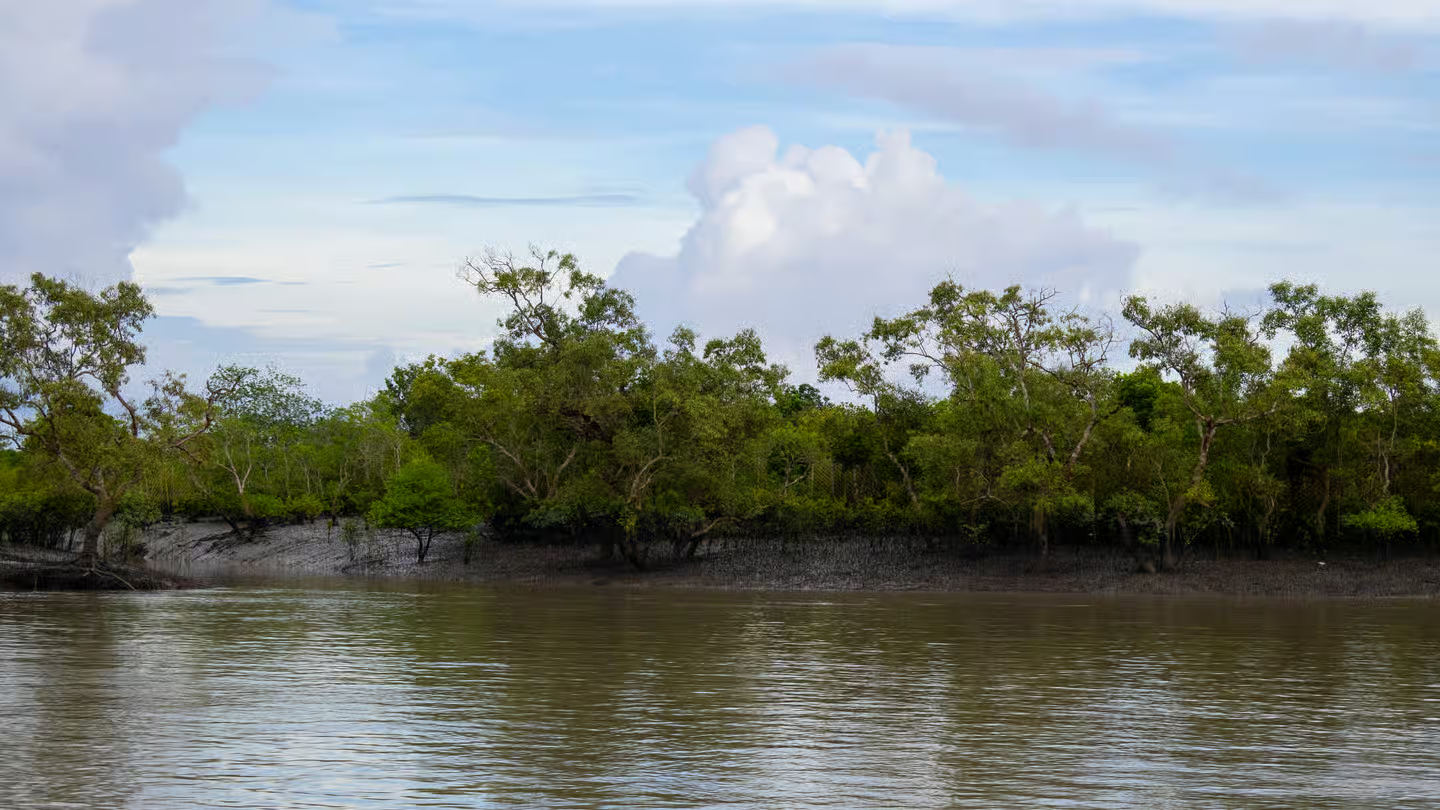
Sundarban Tiger Reserve floods twice a day, and the only way in is by boat. The engine cuts and the boat drifts. On the mudbank fifty metres off, a spotted deer herd grazes with the nervous attention of animals that know exactly what lives in the treeline. A crocodile slides off the bank without a ripple. Somewhere behind the breathing roots, in the largest mangrove forest on earth, a hundred tigers are going about the only semi-aquatic lives of their kind: swimming between islands, drinking brackish water, hunting in a forest that floods twice a day. The watchtower at Sudhanyakhali has photographed them dozens of times. From this boat, right now, there is water, birdsong, and possibility. That is the Sundarbans experience, complete and honest, with or without the cat.
Nobody who understands the Sundarban Tiger Reserve promises tigers in it. The forest promises everything else, in such quantity that the promise holds.
No roads
Say the structural fact first, because it governs everything. There are no roads through the Sundarbans and no jeeps in it. Access runs by boat from Godkhali jetty: launches and houseboats working tidal creeks between fixed watchtowers, landing permitted only at Sajnekhali, Sudhanyakhali, Dobanki and Netidhopani, the forest floor itself permanently off-limits on foot. This is not a constraint to work around. It is the entire form of the visit.
The circuit has its own grammar. Sajnekhali for permits, the interpretation centre, the first tower. Sudhanyakhali for the freshwater pond that draws wildlife all day and the strongest tiger reputation of the four stops. Dobanki for the half-kilometre canopy walkway above the mangroves, an aerial perspective no other park in this series offers. Netidhopani for ruins, quiet, and the Behula legend in the stones. Two days covers it well. Three covers it properly.
The swimming tigers, honestly placed
Now the ledger. Around a hundred tigers live in the Indian Sundarbans, adapted to semi-aquatic life in ways no other population attempts: swimming creeks, hunting fish and crab alongside deer, moving through tidal forest on schedules the tide writes. Sighting odds run among the lowest in this series, and every honest operator says so. The cats are present, elusive, and superbly camouflaged in root-and-mud country that defeats long sightlines entirely.
Add the supporting cast at full strength: saltwater crocodiles, Gangetic and Irrawaddy dolphins, fishing cats, otters, three hundred bird species with the masked finfoot and mangrove pitta for the list-keepers, and the Bonbibi folklore that frames the whole delta as shared ground between people and tigers. The 2024-25 season drew over 365,000 visitors, which tells you the labyrinth needs no tiger to fill boats. Come for the mangroves, the tides, the towers at dawn. Let the tiger be the bonus the forest occasionally grants.
The practical layer, without illusions
Fly to Kolkata, drive three to four hours to Godkhali, board. Foreign nationals need a special forest permit arranged in advance. Tuesdays now close the reserve to tourists. Houseboats anchor overnight in designated reaches; most visitors book through Kolkata operators who bundle permits, boats, guides and food, because self-organising this delta is a hobby for the experienced. Book peak weeks well ahead; the core permits are finite and the Christmas fortnight vanishes by October.
Against Tadoba the logistics share nothing: different state, different airport, different water, different holiday. From Limban the position needs no diplomacy. The Sundarbans is another trip, full stop.
When to go
October to February for comfort and visibility, March into the shoulder, monsoon rough and cyclone-watched. The reserve never quite closes the way land parks do, but the tides and the weather decide more here than any calendar.
So which one
The Sundarbans for the singular mangrove world: tidal creeks, canopy walks, crocodiles, dolphins, folklore, and the swimming tiger as the rarest of bonuses. If you want the forest no other forest resembles, this is your park and nothing in central India substitutes.
Tadoba for tigers as the premise: the readable teak, the appointments, the encounter rate no tide can match. The two parks share a cat and almost nothing else, which is precisely why they share this series. For the other boat safari in the family, our Periyar piece. Comparing more than these two parks? All fifteen Tadoba verdicts stand side by side in the India Tiger Parks series.
Planning a Tadoba safari?
If Tadoba is your destination, stay at Limban and safari from Limban. Tell us your dates and we plan both halves together: room and forest, confirmed before you arrive. Start the Conversation →